|
[ 1 ]
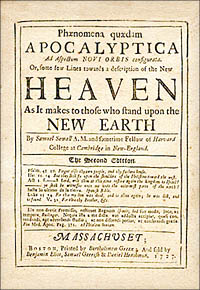
SOME FEW LINES
Towards a description of the
NEW HEAVEN.
Not to begin to be; and so not to be limited by the concernments of Time and Place; is the Prerogative
of GOD alone. But as it is the Priviledge of Creatures, that GOD has given them a beginning: so to deny
their actions; or them, the respect they bear to Place, and successive duration, is, under
a pretence of Promotion, to take away their very Being. Yet notwithstanding, some Things have had this to glory of;
that they have been time out of mind; and their Continuance refuses to be measured by the memory of Man. Whereas
New-England, and Boston of the Massachusets have this to make mention of; that they can tell
their Age; and account it their Honour to have their Birth, and Parentage kept in everlasting Remembrance. And in
very deed, the Families, and Churches which first ventured to follow Christ thorow the Atlantick Ocean, into
a strange Land, full of wild men, were so Religious; their End so Holy; their Selfdenyal in pursuing of it, so
Extraordinary; that I can't but hope that the Plantation has thereby gaind a very strong Crasis; and that it will not
be of one or two, or three Centuries only; but very long lasting. Some who peremptorily conclude
that Asia must afford situation for New-Jerusalem, are of the mind, when that divine City comes to be
built, the Commodities of It will be so inviting as will drain disconsolate America of all Its Christian
Inhabitants, as not able to brook so remote a distance from the beloved City. But if Asia should be
again thus highly favored, and the eldest daughter be still made the darling; yet 'tis known there will be a River,
the Streams whereof shall make glad the City of God. The Correspondence, and Commerce of the little cities,
and villages in the three Kingdoms, and Plantations, do make LONDON glad.
2
Of the New Heaven upon the New Earth.
And so it will be with New-Jerusalem: the Nations of them which are saved, shall walk in the light of it: and the
Kings of the Earth do bring their glory and honour into it. New-Jerusalem will not straiten, and enfeeble; but
wonderfully dilate, and invigorate Christianity in the several Quarters of the World; in Asia, in
Africa, in Europe, and in America. And one that has been born, or but liv'd in America,
between thirty, and fourty years; it may be pardonable for him to ask, Why may not that be the
place of New-Jerusalem? Problematical Questions do circulate; and this was set up by Dr. Twisse above
threescore years ago; the newness of it in its return after so considerable a space of time, will, I hope, render it
gratefull, or at least, will procure leave for one, with a little alteration, to enquire, Why may not New-Spain
be the place of New-Jerusalem? Its being part of the New World, one would think, carries with it no
contradiction thereunto. Places are usually called new from the newness of their situation; and not from their being
built anew; as New-Spain, New-England, New-London. For certain, If Mr. Eliot's Opinion prove
true; viz. that the aboriginal Natives of America are of Jacob's Posterity, part of the long since
captivated Ten Tribes; and that their Brethren the Jews shall come unto them: the dispute will quickly be at
an end. Manasseh-Ben-Israel is said to have published a book entituled, The hope of Israel, endeavouring
to prove this Position. For my own part, what Mr. Downam, and Mr. Thorowgood have written on this head, seems to be of
far more weight with me than what Hornius, or any other that I have seen, have guess'd to the contrary. Mr. Eliot was
want to say The New-English Churches are a preface to the New Heavens: and if so, I hope the preface and Book
will be bound up together, and this Mexican Continent shall comprehend them both. Who can tell, but that
David may thus fetch a compass behind his Antichristian enemies and come upon them over against the Mulberry
trees, and utterly destroy them by the brightness of his coming? Who can tell, but that Christ may in this matter
expose the lewd fondness of the Unholy War, and happily umpire the Difference about the holiness of Places by causing
New-Jerusalem to come down from God out of Heaven, upon that Earth wherein Satan, for many Ages, has peaceably
possessed an entire, and far more large
Of the New Heaven upon the New Earth.
3
empire than any where else in the whole world besides? No body doubts but that our Saviour can enter into this
strong man's house, bind him, and spoil his goods: Let us wait till He revive us by saying, I am willing. If I
mistake not we have a warrant sufficient enough to encourage us unto a perseverance in hoping, and waiting
upon God for this Salvation.
Ask of me, and I shall give thee the heathen for thine inheritance, and the Uttermost parts of the earth
for thy possession.
Of all the parts of the world, which do from this Charter, entitle themselves to the Government of Christ,
America's plea, in my opinion, is the strongest. For when once Christopher Columbus had added this
fourth to the other three parts of the foreknown World; they who sailed farther Westward, arriv'd but where
they had been before. The globe now failed of offering any thing New to the adventurous Travailer: Or
however, it could not afford another new World. And probably, the consideration of America's being the
Beginning of the East, and the End of the West; was that which moved Columbus to call some part of it by
the Name of Alpha and Omega. Now if the Last ADAM did give Order for the engraving of his own
Name upon this last Earth: 'twill draw with it great Consequences; even such as will, in time, bring the poor
Americans out of their Graves, and make them live.
Thou shalt break them with a rod of iron, thou shalt dash them in pieces like a potters vessel.
'Twas most awfull to see, or but to hear of Christ's Spanish-Iron Rod walking amongst the earthen pots;
whereby great Kingdoms, and Empires were quickly broken to shivers, with many millions of their subjects;
unto whom both defensive, & offensive Iron was unknown, which made the deadly impressions of
their Enemies weapons, and the inefficacy of their own, surprising to amazement. It is to be noted, that the
Pots wherein they boiled their fish, and flesh, &c. were made of earth; as also innumerable other vessels: most were
enjoind to use no other. By this means the Potters trade was in principal demand among them: which renders
this Metaphor very agreeable. In the computation of Time made by the Mexican Nation, their greatest Period
consisted of Fifty two Years; which they call'd a Wheel. Upon the last night of every Wheel they used to break
all their Vessels, and stuff; and put out their fire,
4
Of the New Heaven upon the New Earth.
saying that the World should end at the finishing of one of these Wheels, and it might be at that time. Upon this
conceit they passed the night in great fear, and watched very carefully for the day. But when they saw the day
begin to break, they presently beat many Drumms, sounded Cornets, Flutes, and other Instruments of Joy,
saying, that God did yet prolong the time with another Age. And then began another Wheel, on the first day
whereof they went to the high priest and took new fire, and bought new Vessels. Joseph Acosta, lib. 6. cap. 2.
When the Spaniards came, they took these miserable Potters themselves, and dash'd them in pieces one against
another. Holy Hilary, in his Exposition of the second Psalm, is exceedingly concerned, lest there should be any
imputation of Ingratitude to our LORD, upon the account of his seising upon his Inheritance in such a manner,
as presently to break it in pieces with an iron Rod. But he quiets himself in this; that it is in order to
Restauration, and Reformation.
Be wise now therefore, O ye kings: be instructed, ye judges of the earth. Serve the Lord with fear, and rejoice
with trembling. Kiss the Son, &c.
They who will not take warning by Belshazzar, and Montezuma; and will not learn, in all their
Administrations, to glorifie the God in whose hand their breath is, and whose are all their ways; they must expect to
come to worse ends than they did. Great Montezuma, who laboured to be worshiped as a god. No plebeian might
look him in the face; if he did, he was punished with death. He did never set his foot on the ground; but was always
carried on the shoulders of Noblemen; and if he lighted, they laid rich Tapestry whereon he might go. When he
made any Voyage, he and the Noblemen went as it were in a Park compassed in for the nonce; and the rest of
the people went without the Park. He never put on a Garment twice; nor did eat, or drink in one Vessel, or Dish
above once; all must be new. He used to be attended by Noblemen barefoot. This Montezuma, of whose bloody
Pride, and Luxury he knew no bounds; was at last imprisoned in his own Palace by his unwelcom Guests; was hated
by his subjects; covertly and basely slain; so that tis yet controverted, whether Spaniards, or Indians
were the
Of the New Heaven upon the New Earth.
5
authors of his death. But howsoever, Montezuma died miserably, and paid his deserts to the just judgment of
our Lord of heaven, for his Pride, and Tyranny: His body falling into the Indians power, they would make him
no Obsequies of a King; no not of an ordinary person: but cast it away in great disdain, and rage. A servant of
his having pity of this king's misery, made a fire thereof, & put the ashes in a contemptible place. Acosta,
lib. 7. cap. 22, 26.
Some judicious and learned Divines have conjectured that America is prophesied of in the thirty seventh of
Ezekiel, under the denomination of a Valley. Certainly, no part of the habitable World, can shew more Bones;
or bones more dry, than these vast Regions do. Mr. Downam thinks that Mr. Eliot's taking his Text from
thence when he first preached to the Indians, has its weight. His Appendix to the Letters from New-England,
is well worth the reading. The Prophet is said to be carried out in the spirit: and for ought I
know, he might be carried beyond the limits of the then known World.
Dan. 11. 45. And he shall plant the tabernacles of his palace between the seas in the glorious holy Mountain; yet
he shall come to his end, and none shall help him.
The complexion of this portion of Scripture is such, as constrains me to imagin, that the place designed by the
Holy Spirit, is no other than America. Every word almost, has an emphasis carrying
in it, to me, the perswasion of this sence. They who remove from one Land to another, there to dwell; that settlement
of theirs is call'd a Plantation. Especially, when a Land, before rude and unfurnish'd, is by the New-comers
replenished with usefull Arts, Vegetables, Animals. Thus when in the year 1492. Christopher Columbus had opened the
way, the Spaniards planted themselves in the spatious Regions of America; and, too much, planted
Antichristianisme in the room of Heathenisme. Tabernacles] So called from the movableness of their condition,
and shortness of their continuance. As Tents, they were lately set up; and, notwithstanding all their Praemunitions,
so far as they are Antichristian, they shall be taken down before it be long, by the immovable Counsel and
Providence of God.
6
Of the New Heaven upon the New Earth.
Palace ] The Extent, Riches, and Pomp of the Mexican, and Peruvian Empires, are very great:
Insomuch that when the Church of Rome met with Losses in Europe, they pleased themselves with their Gains in the
New-World. They glory in the many Churches they have planted there; which are, they say, without all mixture
of Hereticks. If with Mr. Nicholas Fuller, Miscel. Sacr. Lib. 5. Cap. 18. we take this word to signifie Equile
Regium, Horse-Guards; It will still look upon America. The Reputation the Spaniards Horses gave
them, did much contribute towards their prodigious Conquests. And after above threescore dangerous battels,
Mexico was at last taken upon Hippolytus day; August, 13, 1521. Since which time, Horses,
that were never seen there before, are one of the four Fair Things of that Citie.
Between the Seas] the middle Provinces of the New World, governed by the Vice Roys of Mexico, and
Peru, are known to lye between two of the most wide, and famous Seas of the whole World. The American
Isthmus; respecting its own narrowness, and the bold approaches of the huge Ocean on either side, does command the
title of Nonsuch. America it self, and they who pass thether, are so much concernd with the Sea, that Peter
Martyr stiled his History, Decads of the Ocean. And in the general History of Spain, part of the King's Tide
is, The Islands, and firm Land of the Ocean Sea. Grimeston, p. 1234. in the glorious holy Mountain]
Ingenious Joseph Acosta lib. 3. cap. 19. speaking of New-Spain, hath these words, Which without doubt, is
the best Province the Sun doth circle. And Mr. Gage, in his faithfull Relations, cap. 12. p. 134. speaks of its
Excellency in this manner, "There is nothing in Mexico, and about it, wanting which may make a City happy.
And "certainly, had those that have so much extolled with their pens the parts of Granada in Spain; Lombardy, and
Florence, in Italy, making them the earthly Paradise; had they been acquainted with "the New World, and with
Mexico, they would have recanted their untruths. O that the Lord were "truly worshipped where He hath poured
forth the Treasures of his Goodness for the children of men! O that in that Eden, the tempting and enticing
Serpent were not so much obeyed in the use of the fair seeming apple of Pleasures; and the LORD that hath
enriched it with such Varieties, so much neglected! The
Of the New Heaven upon the New Earth.
7
difficulty attending this construction, lyes in the word (holy) which may be intended by way of Anticipation.
What place more infamous for Unholiness than Canaan? and yet it is said Exod. 15. 13, 17. Thou in thy mercy
hast led forth the people which thou hast redeemed: thou hast guided them in thy strength unto thy Holy
habitation. Thou shalt bring them in, and plant them in the mountain of thy inheritance, in the place, O Lord,
which thou hast made for thee to dwell in: in the Sanctuary, O Lord, which thy hands have established.
Neither is this altogether dissonant from excellent Calvin's Commentary. For that which remains of the Roman
grandeur, is shared between the Emperour of Germany, and the Pope: and they both contributed towards the
planting these Tabernacles. Pope Alexander the sixth (that horrible Monster) by his Bull or Donation dated
1493. Quarto Nonas Maij; and Charles the fifth, by his Expence, and Royal Authority. They also that do govern
in America, are not Kings, but Vice Roys, answerable to Calvin's Proconsuls. And 'tis not Mexico, and
Lima; but Madrid, and Rome, that are the original, and principal Seats of the Government. Take a Specimen of
Antichrists inevitable coming to his End, in the death of Roderick Borgia, afterward Pope Alexander the sixth;
taken almost word for word, out of Onuphrius in the Life of that Pope, and out of Guicciardin, lib. 5.
p. 235, 236. It is most certain, saith he, that in his father and in him; Caesar Borgia Duke Valentynois, were natural
customs to use Poison; not only to be revengd of their Enemies, or to be assured of Suspicions: but also upon a
wicked Covetousness, to dispoil Rich Men of their Goods: whether they were Cardinals, or Courtiers; altho they
had never don them wrong; as happened to the Cardinal St. Ange, who was very Rich. This manner of Rage
they would use also against their greatest Friends and Familiars, and such as had been their most faithfull
servants; such as were the Cardinals of Capua, and Modeno: a Recompence unworthy the merits of good men;
and not disagreeable to the disposition of such a Father, and son; whereof the one made all things lawfull by
vile Dispensation: and with the other, nothing was dishonest wherein was Opportunity to his purposes. Upon the 17th of
August, anno 1503. a Banquet of Wine was made in the Arbour of the Vatican [ad umbrosum Vaticani ruris fontem]
8
Of the New Heaven upon the New Earth.
for the poisoning of Adrian Cardinal of Cornette, or of some of the Richest Senators, as Onuphrius has it.
Valentynois sent before, certain flagons with Wine infected with Poison; which he gave to a servant that knew
nothing of the matter, commanding that no person should touch them. The Pope coming by adventure, somwhat
before the Supper, and overcome with the Drought, and immoderate heat of the time, call'd for drink: and
because his own provision was not yet brought from the Palace, he that had the infected Wine in charge,
thinking it to be commended to his keeping for a wine most excellent, gave the Pope to drink of the same wine
which Valentynois had sent: who arriving whilest his father was drinking, drank also of the same wine; being
but just, that they both should taste of the same Cup, which they had brewed for the destruction of others.
Valentinois, by the vigour and strength of his Youth, and ready Help of strong Medicines, and Counterpoisons,
had his Life saved; remaining notwithstanding oppressed with a long and grievous Sickness. But his father the
Pope being aged, and unable long to endure the strength of the poison, died the next day, Aug. 18th in the
Vatican at Rome, in the 71th year of his Age, and the eighth day of the twelfth Year of his Popedom. The Corps
was borne into the Church of St. Peter, black, swolne, and most deformed. All the Town of Rome ran with great
gladness to St. Peters, about the dead body of the Pope, their eyes not being satisfied to see dead & destroyd a
Serpent, who with his immoderat Ambition, & poisoned Infidelity, together with all the horrible Examples of
Cruelty, Luxury, and monstrous Covetousness; selling without distinction, both holy things and profane things,
had infected the whole World. Thus far Guicciardin in that place. In the Death of this Planter God hath given
Earnest, assuring us that He will in the fittest Season, utterly root up the whole papal Plantation, so as
none shall be able to Help them.
The cognation that there is between this Prophesie, and that of the Revelation, is so great, as occasioned
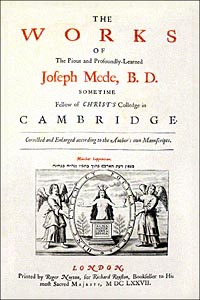
Mede to answer, I conceive Daniel to be Apocalypsis contracta: p. 964. It will not therefore be
incongruous to pass immediatly thether, without any other Transition.
Rev. 6. 8. And I looked, and behold, a pale horse; and his name that sat on him was Death, and hell followed
with him:
Of the New Heaven upon the New Earth.
9
and power was given to them over the Fourth part of the earth, to kill with sword, and with hunger, and with
death, and with the beasts of the earth.
The Four Quarters of the World seem to be represented by Four Animals; Asia by the Lion; Africa, by
the Calf; Europe, by the Man, and America, by the Eagle. Accordingly, the
four first Seals seem to be Local; each of them chiefly, or firstly regarding what was to be done in some One Quarter
of the World. So that Asia was to be the principal stage of the First Seals; Africa, of the Second;
Europe, of the third, and America, of the Fourth. America is fitly represented
by an Eagle, which Royal Bird is very frequent there, and was once the Standard of the Mexican Empire;
the unparalleld Miseries whereof, and of the New World are here described. And there is no Verse in the whole Bible
doth so pathetically, and with so much Amplitude, and Variety foretell the Destruction of Men: So wide, and deep the
Measure needed to be, that was to contain the Blood, and Slaughter of America! If there may be any
accommodation in that, the Colour of this Horse is much like the Colour of the Indians. And altho it seem an oddity
in Beza's Translation set forth Anno 1556. to make the Rider feminine; yet it may serve to put one in mind that
this tragical Scene was first opened by the Magnanimous, and Modest Isabella Queen of Castile. From the death
of this gracious Queen, which fell out Anno 1504. the American Destructions are observed to bear Date.
Hell followed &c.] This is added by way of horrid Aggravation, being a most dismal Exemplification of that
Proverb, Where there is no Vision, the people perish. Dr. Fulk in his Praelections published 1573. speaks thus,
Sequitur autem mortem Infernus, ne Corporum tantum hœc lues esse censeatur: sed quam aeterna Animae mors,
& tormenta Inferni consequantur. Et corporis quidem mortem Infernus semper sequitur, nisi in ijs solum quibus
morte Christi retusus est aculeus mortis. Mr. Arthur Dent, Anno. 1603. "For assuredly, Hell doth always follow
the death of the body, excepting those only whom Christ hath delivered from Hell and Damnation, by the
power of his Death. All these perished without Faith, and without Sacraments, in the dolefull Epiphonema
which Bartholomew de las Casas often makes, where he gives an account
10
Of the New Heaven upon the New Earth.
of Twenty Millions Slain, Destroyd, and sent to Hell by Spanish Cruelties. The Grave has nothing to do
here. Multitudes of the slaughtered Indians had no other Grave than the Bellies of Men, Spanish Dogs,
and wild Beasts. In several places of this very Province, about the Year 1618, there was such a
Plague among the Natives, that the living were not able to bury the dead; by which means the ground became strawed
with their Bones.
Fourth part] it is the Field, and not the Proportion of the slain, that is here designd: the
Jurisdiction of the Destroyers is delineated in those words, Upon the Fourth part of the Earth, i.e. Upon, or
over America. What ever Variation there may be in reckoning the other parts of the World; yet America
always obtains the Fourth place, as not only last, but very lately discovered to the rest. The Quaternion of
Evils here specified, are notoriously known to have Ranged over this Earth. Dr. Whitaker affirms that no Histories
make mention of so great Tyranny, as the Spaniards exercised over the Indians. De notis Ecclesiae, p.
505. And Amandus Polanus in his Commentary upon Daniel, doth very largely, and pathetically describe this
Desolating Abomination. Vide cap. 11. 31. p. 1067, 68, 69, 70. Neither need one
salve the last Instance by a Metaphor: the Indians, to shun the Spaniards, fled from their delightful
habitations by the Seaside, and betook themselves to the mountainous Deserts, where the Tigers met with them, and
devourd them. And the Spanish Dogs killd, and eat Multitudes of them: which might help to sharpen Mr. Mede's
Pen, and cause him to say, Christ our Lord sends his Mastives, the Spaniards, to hunt them out, and worry
them: which they did in so hideous a manner, as the like thereunto scarce ever was done, since the Sons of Noah
came out of the Ark. Epist. 43.
The following Seal did for many Years, seem to make against the forementioned Applications, as altogether out
of Time: But within these few Months, It seemd rather to offer Arguments for them. For the Prophesie doth not
say when the Martyrs were slain, but when they were seen. Now if the Fifth Seal be concluded with the
Year 311, or 325, the Antichristian Persecution, the longest, and most grievous of all, will be wholly
excluded. Whereas John was so posted, as that he might look backward all along to the beginning;
Of the New Heaven upon the New Earth.
11
and forward all along, to the end of Martyrdom. The eleventh verse also seems to intimate that, measuring from this
Moment, much more of the time of Persecution was past, than was now to come: Yet for a little season,
may be understood in Comparison with what was already past. Upon the whole, I humbly crave leave to offer,
whether the Year 1572, or 1573. may not be the Article of Time intended for this Prospect? Upon the
supposition that Four of the Seals are Local, twas most orderly and methodical to place them all together; tho
some passages of the Fifth might have an earlier commencement, than some of them. The Four Parts of the
World are as so many Colledges rounded, & endowed for the setting forth of the Glory of God. Christ had
bespoke Witnesses in every one of them; and therefore New-Colledge also is first mentioned, before the Fifth
Seal bring in the whole University of Martyrs. under the altar] It is to be noted, that in the Year 1554, the
Sacrament of the Altar began to kindle Fires upon the English Altars: and there Christ in his Members,
was by Authority, Tried, Condemned, and publickly crucified, to a degree scarce equalled in any other Nation. The
Excellency and Preciousness of so many Voluntary Whole-burnt-Offerings, made the Pillars of Smoke, and Fire
to ascend on high, and to be taken notice of all the World over. And Mr. Fox prepared such a golden Oyl to feed
those Flames; that they still do, and always will mount up, in perpetuam Res memoriam. The London Fashion
was not approv'd of at Paris; neither, indeed, could it be follow'd: besides that so long and tedious a Process
was a thing of too slow and dull a temper for that Climate. Bartholomaeus de las Casas writ in the Year 1542.
fearing lest he should incur guilt in concealing the Loss of an infinite number, both of Souls and Bodies.
Polanus saith, his Book was printed in Spanish, at Sevil, apud Sebastianum Trugillium, Anno 1552. He
did with such irresistible Importunity represent the Outrages committed in the New World, as prevaild with the
Emperour to send over Commissioners on purpose to See whether it was so, or no; and upon their Report, took
a better Order, both for their temporal, and spiritual Estate: notwithstanding a strong Interest made against said
Casas in the Court of Spain. Tis possible, these extraordinary Efforts; both in Speaking, Writing, and Printing may
12
Of the New Heaven upon the New Earth.
be signified by a more express attribution of a Voice to the Fourth Animal. In the Year 1572. Paris it self, and
the Prisons in Lions, and over the Kingdom, were made the King's Slaughter-Houses. They of the Reformd
Religion were commanded thither, under a pretence of keeping them out of Harms way: And there within the
Courts of the Prisons, the Butchers Ax and Knife, and Streams of Blood too, as much as might be, were kept out
of sight of the common people; for fear lest Humanity should have got the upper hand, and Roman-Catholicks
should have rescud their Neighbours of the Reformation, from that monstrous Excess of Barbarity. At Lions,
the publick Executioner, and the Garrison Souldiers innobled themselves by refusing to kill these Sheep thus
brought into the Butchers Pen; tho commanded by the Governour. As Saul's Guard of old, so their Unfading
Honour shall never be in danger of being out of Mind, by being out of Sight, so long as any Compositors
and Pressmen shall be left alive. In this Massacre, the Place and Means of the Trepan, were so Eminent; the
Nobility, Number, Worth of the Martyrs slain, so very Extraordinary, that the Cry thereof went up to Heaven,
and the Noise of it made the whole Earth to Ring again. Polanus, to the date of his Epistle before his Exposition
on Daniel, subjoins this Chronogram, composd in Remembrance of the Admiral, and of his Honourable
Company of Martyrs; the numeral Letters whereof make 1572. in which Year, August, 24. being the Lord's
Day, this Bloody Massacre was begun:
BARTHOLOMAEUS FLET, QVIA GALLICAS OCCUBAT ATLAS.
The next Year, a Fair Account of this Foul Tragœdy, came forth in Print, bearing this Title.
DE FURORIBUS Gallicis, horrenda & indigna Amirallij Castillionei, Nobilium atq; illustrium virorum caede,
scelerata ac inaudita piorum strage passim edita per complures Galliae civitates, sine ullo discrimine generis,
sexus, aetatis & conditionis hominum: Vera & simplex Narratio. ERNESTO VARAMUNDO FRISIO
AUCTORE. Vis consili expers mole ruit sua. LONDINI, Ex officina Henrici Bynneman. 1573.
Of the New Heaven upon the New Earth.
13
This History brings to mind Three American Martyrs, whose Love to our Lord Jesus Christ appeard to be of
Proof, whenas many Waters could not quench It, neither could the Floods drown It. In the Year 1555. Nicholas
Durandus Villagagnon, a Knight of Jerusalem, one who had been imployd in great Business, a Learned, and
able Man. He out of an eager desire to get Riches, and Honour; did by the mediation of Gasper Colligny the
Admiral forementioned, obtain a Licence of the King to set forth a Fleet, and carry the French Ensigns into the
New World. Upon the 13th of November, he arrived at the capacious Harbour, which by the Portugals is called
Januarius, being in about 23. degrees of Southern Latitude. The Fortress erected there, he called Colligni; and
that he might the more curry favour with the Admiral, he confirmd the hopes he had given that it was a
convenient place for propagating the pure Religion; and petitioned that with his good leave he might send for
some Divines from Geneva. And to that purpose, the next Year he writ to Calvin, who communicated it to the
Elders; and after Consultation upon the matter, two were chosen out of them; viz. Petrus Richerius, of fifty; and
Gulielmus Quadrigarius, of thirty years of Age; who at the Request of Villagagnon, and Colligny, undertook the
Voyage. To these many adjoined themselves; and among them was Joannes Lerius. Philippus Corquillerius had
the Conduct of the whole Company committed to him: He betook himself to Geneva for the sake of Religion,
and was known to Colligny, by whose Letters he was solicited to engage in this Affair, tending so much to the
glory of God. At their Arrival in America, they were received with expressions of great Joy; and quickly after,
their Church was formed according to the Constitution, and Usage of Geneva; Villagagnon going before them
therein, and promising to submit thereunto. About the 20th of March, the Lord's Supper was administred,
Villagagnon himself being present. Afterward Controversies prevailed among them by means of John Cointac a
student of Sorbonne, who out of a fond concept of his own Learning, was ambitious of a Superintendency over
the other Ministers. He was of ill manners, and such a friend to Antichristian Non-Residency, as not to be
asham'd to hold a Benefice in
14
Of the New Heaven upon the New Earth.
France at the same time that he was such a stickler at Brasil. He moved that Sacerdotal Garments might
be provided, the Vessels consecrated, Bread unleavened, and the Wine mingled with Water, and the like. Richers
in his Sermon, inveighed against these humane Inventions and those that sought to introduce them; at which
Villagagnon was very angry, and silencd him: and, as is believed, being advis'd by a Letter from the Cardinal of
Lorain, evil intreated the Geneva Ministers, and wearied them out, and their Company; who with much ado,
through innumerable dangers, and almost starvd, at last got to France. They were about 18, or 20. Leagues at
Sea, when they sprung a Leak; and the most part of their Bread as damnified with the salt water: and they could
hardly free the Ship by pumping. Whereupon, lest they should want provisions for so long a Voyage, the
Captain gave way to the desire of five of the Passengers, to return ashoar in the Boat: which their Company
regretted, for fear Villagagnon should do them a displeasure. But they reckoned themselves safe, having not
given him cause of Offence; but Obligation. And so with much grief on both sides they took Leave;
commending each other to the Keeping of God. Now being unprovided of Mast, Sail, and all manner of
Tackling for the Boat; and of Skill to manage it: twas with infinite difficulty and hazard, that they recovered the
Land, and afterward, the Island and Fortress of Colligny. They speedily presented themselves to Villagagnon,
and acquainted him with the Danger occasioning their Return: and prayd his Favour; forasmuch as they chose to
dwell with their Countrymen; and not with Portugals, or Indians: and had left their Wives and Children
to serve him in this remote Land; which they were ready to do to the uttermost of their power, untill they might have
opportunity of returning to France. The Governour spake them fair; praised God for their Deliverance: and said,
that tho they left him upon discontent, and were now fallen into his power; yet he would leave Vengeance to
God, and by no means deny them Entertainment. However, he refused to let them make the beast of their boat,
to buy Necessaries for recovery of their impaired health. And within a while, was filld with Jealousies, lest all
they had said was feigned; and that Corquillerius called du Pont, Richer and Company, with the help of those
gone to
Of the New Heaven upon the New Earth.
15
the River of Plate, upon notice given, would in one night surprise the Fort, and destroy him and his. Whether
these Fears were real or pretended; he came to a resolution to take them off as Traitors: But not finding how to
make that Charge probable, he pitchd upon Religion, and drew up Articles for them to answer, as thinking such
Sacrifices would be very pleasing to the Court. The French of the Continent perswaded them not to give an
account of their Faith to this Apostat Tyrant: but that they should rather hide themselves among the Portugals,
or Indians. But they were of Opinion that God calld them to bear witness for Him, and accordingly, John
Bordel, who exceeded the rest in Learning and Grace, as well as in Age, drew up in writing a Confession of
Faith, containing an Answer to the Articles. This they all read often, and distinctly weighed each Article; and
then all signd it. It begins thus: According to the Doctrine of St. Peter the Apostle, in his first Epistle;
all Christians ought always to be ready to give an account of the Hope that is in them, &c.
The Conclusion of their Confession is in these words, This is the Answer which we have made to the Articles
sent by you, according to the measure and portion of Faith which God hath given us. Let Him be pleased to
cause that it may not dye in us; but may produce fruits worthy of his Children. He giving us Perseverance in the
same, we will ascribe Praise and Thanks unto Him to all Eternity. Amen.
JEAN du BORDEL.
MATTHIEU VERMEIL.
PIERRE BOURDON.
ANDRE la FON.
When their Orthodox Confession was sent to Villagagnon, he declared them Hereticks upon the Articles
relating to the sacrament of the Altar, and Vows; and said twas unlawfull for them to live any longer, lest the
Company should be infected with their Poison. Yet his resolution to put them to death, he kept as privat as he
could, till Friday, the 9th of February, 1558. on which day he orderd them to be brought from the Continent.
Their friends with tears disswaded them from going to their slaughter. But they considering that God might
have brought them into those parts,
16
Of the New Heaven upon the New Earth.
and preserved them in millions of dangers for this end; could not find in their hearts to desert the Cause of their
dear Lord Jesus: So John Bordel, Matthew Vermeil, and Andrew la Fon went into the boat: But Peter Bourdon
was left behind very sick. Being come to the Island, Villagagnon commanded that they should be brought
before him, who holding their Confession of Faith in his hand, asked if they made and signed it. They answered
that they made it and signd it, every one owning his Hand; and seeing it was according to the Confession of the
holy Apostles and Martyrs of the primitive Church, they were resolved, by the Grace of God, to maintain it.
Their words were scarce out, before Villagagnon discoverd a furious countenance, threatening to put them to
death, if they continued in their damnable Opinion. And presently commanded his Executioner to put Irons on
their Legs; and to every Chain to hang fifty, or sixty pound weight: and orderd them to be shut up in a nasty
dark Prison, and set a Guard of armed men upon them. They comforted one another in Prayer & singing of
Psalms. All the Company of the Island was very much troubled at this action, and secretly comforted the
Prisoners, and gave them provisions which they stood in need of. The next day in the morning, he went well
armd, with a page, into a little Hall, wither he sent for John Bordel in his Irons; of whom he demanded an
explanation of the article of the Sacrament, He confessed that the Bread and Wine were Signs of the Body and
Blood of our Lord Jesus Christ, confirming it by the saying of St. Augustin. Villag. in a great passion, gave him
a blow on the face with his fist; whereupon much blood flowed from his nose and mouth. To the blow he added
words agreeable; You have lyed, Villain, St. Austin never said so: Before I eat, I will reward the fruits of your
Obstinacy. As some tears fell with the blood, Vil. upbraided him, calling him a puny fresh-water souldier, that
would cry for a fillip! Then he asked him if he would maintain, what he had writ and signd. Bordel answered,
Yes, untill by Authority of the holy Scriptures I am otherwise taught. V. seeing the stedfastness of the man,
commanded his Executioner to bind him, and carry him to a Rock which the water coverd twice a day, three
foot. He and his page being armd, attended the poor Sufferer to the place appointed. Bordel passing by the
Of the New Heaven upon the New Earth.
17
prison where his companions were, cryed out to them, with a loud Voice, Be of good Courage, you will quickly
be delivered from this miserable life. As he went along, he sung Psalms, to the astonishment of bloody V. and
his Executioner. Being upon the Rock, twas with much adoe that he got leave to commend himself to God in
prayer, before he went out of the world. The Executioner being too slow for furious V. he threatend him with a
cat of nine tails, if he did not make haste: therefore he immediately threw him into the Sea, where he rendred to
God his Spirit, calling upon the Name of our Lord Jesus till he was drownd.
Matthew Vermeil was brought next, being greatly astonished at the death of his companion, he pleaded with V.
for his life with such Expostulations, Have we robbed you, or evilly entreated the least of your servants? Have
we plotted your death, or done any thing to your dishonour? No Villain! said he; you and your companions dye
for no such things as these; But because you are a most dangerous Pest to be separated from the Church, lest
you spoil the rest of my company. The Martyr answered, Eight moneths are not passed since you have made an
ample confession of the Points for which you make us dye this day. Afterward he petitioned him again for his
life, offering to become his servant. V. said he had nothing for him to do: but he would think of it, if he would
recant his Error. Vermeil seeling no hope given him, but what was destructive to his Salvation, became thereby
resolv'd in his mind, and Cryed out with a loud Voice, I had rather dye, to live eternally with the LORD: than to
live a little while, and dye for ever with Satan. After he had made this Prayer upon the Rock, and commended
his Soul to the Care of God, he freely delivered himself into the hands of the Executioner; and Crying out with a
loud Voice, Lord Jesus! have mercy on me! He gave up the ghost. Andrew la Fon had not strength enough to
climb up into this Rock of Martyrdom: but by Promises & Threatenings, was drawn to some degree of
Recantation: Or else was favoured by Villagagnon for the sake of his Trade of a Tailor, which was very
necessary. And so his life was spared.
But the bloody Sacrifice of Vil. is not yet ended: One Victim remains; viz. Peter Bourdon, who was left very
sick on the Continent. Villagagnon went himself thither, took
18
Of the New Heaven upon the New Earth.
one ashoar with him. His first salutation to the poor sick man was that he must get up, and go into the boat;
Bourdon would have excused himself, from his inability to do him any service by reason of sickness.
Villagagnon told him, this was to cure him. The poor man not being able to stand, much less go; he caused him
to be carried aboard. Villagagnon asked whether he would stand to the Confession he had signd. He answered,
he would consider of it. As soon as they came ashoar, the Executioner bound him without any more adoe,
advertising him to have a care of his Conscience. Bourdon supposing that to be the place where his companions
obtained the Victory over death; he recommended his soul to God, and Cryed with a loud Voice, Lord God. I
am of the same Paste with my Companions, who maintained the Combat for thy Name, with glory and honour: I
pray Thee, shew me Favour, that I may not succumb amidst the Allurements of Satan, the World, and the Flesh.
I pray Thee, pardon all my Transgressions & Offences that I have committed against thy Majesty: and this in
the Name of thy wel-beloved Son, our Lord. Having prayed thus, he turned himself towards Villagagnon, and
asked him for what he was to dye. For signing an heretical and scandalous Confession, said Villagagnon. When
he asked upon what point, he was declared an heretick; Villagagnon told him it was no time to dispute, but to
look to his Conscience: and bid the Executioner make haste: Bourdon seeing that Divine and humane Laws
were as it were buried, being very resolute, he submitted himself to the Executioner; and calling for the Help
and Favour of God, he dyed in the Lord. This Tragœdy was ended about ten in the morning. After which,
Villagagnon exhorted the people to avoid the Sect of the Lutherans; with which he himself was once infected,
to his great grief. He threatened death to the obstinat; saying, that everyone ought to observe what their fathers
religiously taught them. This day he commanded plenty of Provisions to be given to the Artificers and
Labourers, in token of Rejoicing. He had written to some Courtiers, that if they would not blame him for
carrying Preaching into Brasil, what great matters he would do against the Ministers; promising to silence
them. After this great Cruelty, his Affairs went every day to wreck: Returning to France, he fell into
Disgrace there; at last a secret
Of the New Heaven upon the New Earth.
19
fire consumed him by degrees, and he dyed miserably, without repenting of his Apostasie. French Martyrol.
Lib. 7. Fol. 400, to 404. and 414, to 418. Also Fox, his Table of French Martyrs, Vol. 2. p. 129. In this
history, we are rather to admire the Grace of God helping three of this Company to go so far; than that the fourth went
no further: Especially considering how destitute they were of Books, and of Friends that durst speak a word on
their behalf; and above all, of their godly, learned Ministers, who might counsel them, and comfort them in their
Agonies: whereas they had to do with a hasty furious Tyrant, more like a Leopard, than a Lord.
But to return to Revel. 6. 9. There seems to be a Distribution of Martyrs into two Classes. The first were
slain because they were Christians; the latter ware slain because they were Not Papists. For the WORD of
God] i.e. For the sake of Christ: They were for JESUS, and not for Jupiter. Testimony is, as it
were, a Term of Art pointing to the Sack-cloth Witnesses mentioned Chap. 11.
dwell upon the Earth] This Phrase seems to be a stated Periphrasis for Antichristians; who impudently
pretend to the Monopoly of all that is Ecclesiastical: whereas it is here said, that they themselves are
Extra Ecclesiam. And white Robes were given unto every one of them] The very material garments in which they
commonly suffered, were of that Colour. And these words seem to be meant of the Justice done to the Memory of these
slain Martyrs, by the True and Universal Histories that were written of Them about this time, whereby they
were vindicated from the Reproaches of their beastly Pursuers; and had their Proper Character given them.
Their filthy garments and Crowns painted with Devils, were taken off from them; and Fair Mitres were set upon
their Heads, and they were clothed with change of Raiment. So much as might be, a particular Account was
given of each ones Birth, Education, Employment, and Causes of Suffering. Illyricus, his Catalogus Testium
Veritatis was printed at Basil 1556. About the same time John Crispin, Beza's intimat friend, writ the French
Martyrology at Geneva; which has been very much enlarged, a compleat and excellent Composure: And tis
remarkable, that the words of Rev. 6. 9, 10. are set before us in the Title-page. John Fox began his universal
20
Of the New Heaven upon the New Earth.
History of Martyrs, at Basil, during his exile there; and perfected it at London, after his return. At first, he
writ in Latine, and sent the Copy to Basil to be printed, where the Work is in great Estimation; as also in divers
other foreign Nations. Legatur Martyrologium Joh. Foxi, saith judicious Pareus in his learned Commentary
upon Rev. 16. 6. Col. 8. 31. His more compleat English Edition was finished about the Year 1570. Thus Christ
commanded the Keepers of his Great Ward Robe, to clothe his Martyrs with rich and costly white Robes of
Latine, English, and French Contexture. Mr. Fox affirms, that by the Iniquity of Time, this Work could not be
contrived in any Kings Reign since the Conquest, before the Halcyon days of Queen Elisabeth. One Reason
why this important Work could best be performed then, may be gathered from the Triumph which this Learned
Unwearied Author gives the Art of Printing, invented about the Year 1450. Of which, take this specimen: "By
this Printing, as the Gift of Tongues, and as by the singular Organ of the Holy Ghost, the Doctrine of the
Gospel soundeth to all Nations and Countries under Heaven; and what God revealeth to one man, is dispersed
to many; and what is known in one Nation, is opened to all.["] Vol. 1. P. 803. The Usefulness of Martyrologies,
He expresseth thus, Et tamen voluit hoc modo tua declarare Majestas, nobisque innotescere hominibus, quam
honoresicum sit, pro tui nominis gloria fortiter dimicantes, occumbere, quorum Tu vitam a cinere ac rogu sic
vindicas, sic causam tueris, sic dignitatem illustras, ut eandem, cum gloriae faenore, abs Te recipiam clariorem,
quam si nunquam alioqui perdidissent. The best word the Lord Cardinal, and Bishops could afford Mr. George
Wisehart, was, False Heretick, Runnagate, Traitor, and Thief. But when this Cause is brought before Mr. Fox by
an Appeal, He by a very just and impartial Sentence assures us, that he was a most charitable Gentleman, a very
good Scholar, a vertuous Traveller, an orthodox, holy man of God, and blessed Martyr of Jesus. Vol. 2. p. 521.
Very notable is the Restauration of the Memory of Martin Bucer, & Paulus Phagius, by Matthew Parker,
Edmund Grindal, Gualter Haddon and others, the Commissioners of Queen Elisabeth. Cardinal Poole's
commissioners had been such Unrighteous and Cruel Exactors, as to make the Bones of those Worthies to pay
for their Orthodoxy, and fruitfull
Of the New Heaven upon the New Earth.
21
Diligence in the Famous University of Cambridge. It was expressly mentioned in their commission, ad eorum
qui in haeresi decesserint, memoriam damnandum. And part of their sentence was, Eorum Memoriam
condemnandum esse, & condemnamus. See the History at large. Vol. 3. P. 639. Of the Ninth Edition. In this
manner, by these printed Martyrologies, adorned with lively Cutts; the blessed Martyrs are, all under one, both
gloriously Apparelled; and also placed in the open View of the whole World of Christians whom John
personates.
And it was said unto them, that they should rest yet for a little season] Now what the Lord will do with this
wicked World, or what Rest He will give to his Church after these long Sorrows; he is our Father in Heaven,
His Will be done in Earth as seemeth best to his divine Majesty. In the mean time, let us for our parts, WAIT
upon his Graces Leisure; and glorifie his holy Name; and edifie one another with all Humility. John Fox his
Protestation, Vol. 1.
I was now about to have passed on to the Sixth Vial; but am interrupted by some of my Friends, who suppose
that not one of the Vials is yet poured out. To which Objection, I have nothing more satisfactory to my self, to
say, than what I writ in answer to Mr. Benjamin Eliot, April, 7. 1685. Some object, that Revel. 11. 19. &
Rev. 15. 5. intend the same Thing: and the Witnesses are not yet risen, and therefore there is no Vial as yet
poured out. Vide Med. lib. 3. cap. 6. P. 735. Answ. See Med. Synchron. 5. Sect. 3. P. 534. The
word Temple, in both places, signifies the Reformed Church fashioned according to the Commandment of Christ,
and his Apostles; and separated from that sorry earthy heaven conformable to the inventive fancys of men. But these
two Scriptures have respect to very different Times, and Conditions of this Church. The Opening
mentioned Rev. 15. 5. Precedes that mentioned Rev. 11. 19. Some hundreds of Years. The Temple Rev.
15. 5. In the Temple of the Tabernacle of the Testimony. Tabernacle] intimating its ambulatory, and
movable condition; taken down in one place, and set up in another, according to the holy, wise, and soveraign Pleasure
and Providence of God: And this may be spoken in contradistinction to the Temple Rev. 11. 19. wherein God will settle
his Abode, Psal. 46. 4.
22
Of the New Heaven upon the New Earth.
Testimony] The Sack-cloth Witnesses are the constituent parts of this Temple; which for the first Ages of it,
was more closely shut, and less visible: and began now to be more open, when the Commissioners of the Sack-cloth
Testimony stood forth, in order to the execution of their Charge. On the other hand, the Church Revel. 11.
19. Is called the Temple of GOD, intimating that God had a more visible, avowed, and immediat Hand in
building this Temple. As the New-Jerusalem is said to come down from God out of Heaven. It may also imply
the Excellency and Glory of this Church above the former. And therefore God will avowedly and plainly Own
this Church to be His, by his Wonder-working Providence in the face of the whole World. Whereas God did but
privatly, and partially favour the other. And that, many times, Not to save them from death (The Witnesses must
be slain) but to strengthen them, and inable them to dye Triumphing. As it fared with Christ their Head. In this
Divine Temple, the Ark of the Covenant is Seen: There's another difference. Mr. Mede conjectures it may be
meant of Christ's Personal Appearance. See lib. 5. cap. 11. P. 1114. However, then it will satisfactorily and
plainly appear to the Saints, that God in Christ, is a God Keeping Covenant; a God of Truth, Fullfilling every
good Word He hath spoken concerning his Chosen, and concerning his Enemies. Then, and not till then, will it
fully appear, that God is a faithfull Keeper of that Covenant recorded Jerem. 31. 31. and Heb. 8. 8.
The Israelites had indeed served Baal, and not Jehovah: Therefore it was fit that God should carry it
towards them as Baal did to his prophets, 1 Kings, 18. 26-29. But now, God will of his bounteous Grace
provide, that there shall be no more National, permanent Apostasie.
For the Confirmation of what has been said, take a few words of my ever honoured Master, the late Reverend,
Learned and Holy Mr. Thomas Parker, in a Manuscript of his upon Isai. 60. Nova Hierosolyma qua hic
describitur, est ipsa Philadelphiensis Ecclesia, quoad antitypum, inchoata a temporibus Wiclefi; ante cujus
pedes adorabunt omnes ipsius mimici, in compensationem Partientiae, quae sustinuerat Opprobrium
antegressum tempora Wiclefi; et qua sustinuerat Opprobr-ium & Persecutiones passim erumpentes in
primoridijs Regni Christi, post Wiclephum. Restuti. Haec etjam est
Of the New Heaven upon the New Earth.
23
ipsa Nova Hierosolyma quae describitur Apoc. 21. Comprehendit autem statum imperfectiorem, inchoatum a
temporibus Wiclesi; et statum perfectiorem post finem annorum Antichristi; et etjam Perfectum tandem,
introducendum in Gloria Cœlesti. Et paulo post, Violentia in ea jam ex parte cessavit; saltem imperfectius, et
Vicibus alternis: sed tandem perfecte cessabit &c. Sol igitur illius numquam occumbet, quoniam hostes Lucem
ejus nunquam extinguent: licet ad tres dies & dimidium, Voti sui compotes futuri videantur.
Upon these grounds, the forementioned Objection ceaseth to be cogent with me. And I am so far from thinking
that no Vial is yet poured forth; that I am apt to conclude, that no less than Five ANGELS have already
poured out their Vials. So many guesses have been made about the Subject of the Fourth Vial; that if I do enter a claim
for the Sun of Persecution, I shall no more incur the danger of being extravagant, than some that have gone
before me. Certainly, that is the Sun that consolidates and cherishes the Antichristian State. As for the Fifth
Vial; Bullinger, Brightman, Forbes, Pareus, Mede, and Company Interpreters of the Revelation, have poured
that to purpose. As also Dr. Whitaker, The Author of the History of the Council of Trent, Chamier, Robert
Parker, Dr. Ames, Dr. Owen, cum multis Alijs. And seeing the Tower of Babel hath no other foundation than
the Uncertain Vanity of the Apostle Peter's having been at Rome: Uldaricus Velenus did the Babylonians a
singular displeasure in writing a Treatise to prove that He was never there. Bellarmin. de Pontif. lib. 2.
cap. 1. The truth is, except their Index expurgatorius be enlarged with many Clauses of Scripture, the
Probability lies on Velenus his side; Ten to One. And Bellarmin's arguing from Peter's Tomb, is unsound. For it was
customary at Rome, to make Funeral Solemnitys, and erect Monuments for persons dying abroad. Alcyone resolved to pay
that Respect to her husband Ceyx, who was lost at Sea. Ovid Metamor. lib. 11. & lib. 12. princip.
Si non Urna, tamen junget nos Littera; si non
Ossibus Ossa meis, at Nomen Nomine tangam.
How easy was it for the modern Romans to make use of this
Custom when it might serve their turn. Moreover if this Vial partly intends Impressions to be made upon the
City of
24
Of the New Heaven upon the New Earth.
Rome it self; yet we need not wait longer for them. There was a jostling between Charles the Emperour, and
Clement the Bishop. The Emperours Army in their march towards Naples, wanting both Pay, and Provisions;
Charles Duke of Bourbon, was fain to calm them, by promising the Liberty of furnishing themselves at Rome.
Upon the fifth of May, 1527. They incamped in a meadow near the City. From thence He sent a Trumpet to the
Pope, to demand passage for his Army through the City, in his way to Naples. The next morning, May 6. at
break of day, He drew near the Suburbs, by way of the Mountain, and Santo Spirito; wherein he was favoured
by a very thick Mist; which rising before day, and increasing with degrees of Fogg and thickness, became such
a Covert to the whole Camp, that his Souldiers were not discerned till they were near the place where they
began a furious Assault. The Noble Duke marched in the head of his Troops, carrying a scaling Ladder in his
hand; and was unhappyly slain with an Harquebuse shot. Philibert of Chalon Prince of Orange causing his body
to be covered with a cloak, maintain the Charge very vigorously, and by dint of Sword forced his Entrance. The
defendents fled before him; their Fear being far above any other sense or passion in them; and the Suburbs were
entirely abandoned, and left a prey to the Conquerors. Clement was in the Palace of the Vatican, expecting the
issue; who hearing that the Enemies were entered, discovered his Passions of Fear and frailty; and with certain
Cardinals presently betook himself to the Castle of St. Angelo. He was in doubt whether it were best to abide
there; or to retire to some place of greater surety. In the mean time, Berard de Padoa, who was fled from the
Imperial Army, certified the Pope, that the Duke of Bourbon the General was dead, and that their Courage was
thereby so much abated, that they desired an Accord with him: in which matter they sent out men to parly with
the Principals. On the day following, while the Pope was in this perplexity, not knowing what course to take;
the Spaniards seeing neither Order, nor Counsel to defend the Quarter beyond Tiber, entered without any
Resistance; and the same evening, they entered by the bridge Xisto, into the City of Rome, where all was turned
into Flight, and Confusion. For want of great Artillery, the first Dispute was sharp; in which
Of the New Heaven upon the New Earth.
25
there fell of the Imperialists One Thousand. Being exasperated by this Loss, and the death of their General; they
slew and put to the Sword Four Thousand. In their pillaging, small regard was had to Friends or Favourites;
much less was respected the Authority of Cardinals and Prelates, tho of their own Nation; Or the Dignity of
Rich Temples, Relicks, Dedications. It is hard to particularise the greatness of the Prey. But that which made the
Spoil infinite in Value, was the Quality and great number of Prisoners, Redeemed with most rich and huge
Ransoms. The Launceknights, being Germans and favourers of Luther; bore no good will to the Church of
Rome. These took prisoners certain Prelates, whom they apparelled with the Habits and marks of their
Dignities, and then set them upon Asses and lean Mules, with their faces reversed to the crowpe of the beasts;
and so led them through the City of Rome, upbraiding & terrifying of them with the Name of Luther. Many of
them they variously tormented; so that some first yielded a Ransom, and then their Lives. The Cardinal of
Sienna compounded with the Spaniards; and was afterward made prisoner by the Launceknights, who made
booty of his Palace, and then led him all naked with buffets and bastinados, into the borough. He was driven to
redeem his life out of their hands with a promise of five thousand Ducats. The Cardinals Minerva and Ponsaro
payed the Ransom they were rated at, after they had been in a vile Spectacle carried in Procession through the
Town of Rome. One called the Cardinal Sanctorum quatuor, or Cardinal of Pouch, was slain. To these Stroaks
were superadded that of the Plague, which invaded the City and Souldiers at the same time; and made its
Entrance also into the impregnable Castle of St. Angelo, to the great danger of the Pope's life: about whom died
certain special Men who did service to his person. The Pope was at last so far meekened by the complication of
many pressing Calamities attending a strait Siege, as to be brought to a Composition with the Imperialists. He
was to make present payment of threescore thousand Ducats to the Launceknights; and to the Spaniards, thirty
and five thousand: This being done, they were to set him at liberty with all the Cardinals. Within three moneths
after, other like great Sums were to be paid to the Spaniards and Launceknights, according to
26
Of the New Heaven upon the New Earth.
their portions; which together with the Sums that had been paid, amounted to more than three hundred and fifty
thousand Ducats. That he might make these Payments, and deliver himself from the heavy yoke of his
Imprisonment, he created certain Cardinals for Money, of whom the most part, for their Learning or Vertue,
were Unworthy so great Honour. The Cardinals Cesis and Ursin were delivered to the Souldiers as Hostages,
who were led by the Cardinal Colonno to Grottaferara. And so all things having their orderly Expedition, the
Spaniards were to guard him to a place of Surety the tenth of December. But he fearing some variation or ill
Accident, stole away out of the Castle the night before, in the habit of a Merchant, and was guarded to Orvietto.
The Souldiers satisfied of all their Payments from the time of the Pope's delivery, with forty thousand Ducats
over and above, as imprest money for two days, they marched out of Rome the 17th day of February, a day
which had been most joyfull, and of special Respiration to the wretched people of Rome; if their Calamities,
which they supposed to be ended by the departure of the Launceknights, had not eftsoons recontinued in a new
course by the Abbot of Farfa, and others of the family of the Ursins; who entering the Town with the paysants
of their dominion, did for many days many great Insolencies. By reason of these Calamities, grievous for their
continuance, and lamentable for their wretched Succession; descending from one Enemy that was ill, to another
that was worse, the City of Rome was not only made naked of a great part of her Inhabitants, with the
desolation of many houses and Palaces: but also it stood rent and defaced in Images of ancient and worthy
presence, &c. Guicciardin, lib. 18. pag. 851-878. Thuanus speaks after this manner, Caesar, ut injuriam sibi a
Clemente illatam ulcisceretur, nominis pontificij auctoritatem per omnem Hispaniam abolet; exemplo ab
Hispanis posteritati relicto, posse ecclesiasticam disciplinam citra nominis pontificij auctoritatem, ad tempus
conservari. Eodem tempore Columnij a Caesare instigati, Romam occupant, & Clementem in Mausoleo
Hadriani obsident. Nec multo post totes viribus Romam itum, Duce Borbonio, et urbe in petu capta & direpta I }
CCCC postquam a Totila postremo vastata fuit, anno, abunde de Clementis ambigua fide Caesari satisfactum
est. Histor. lib. 1. p. 17. Cesars abolishing the Popes
Of the New Heaven upon the New Earth.
27
Authority for a while, might lead the way to Henry the Magnificent his Unckle, to do it for good and all.
Guicciardin reports the Imperial Army to consist of Four and Twenty Thousand; viz. eight thousand Spaniards,
twelve thousand Launceknights, and four thousand Italians: an Army sufficient to do in Italy what they pleased.
The Cardinals that were in Italy made a motion, that as well they as the other Cardinals beyond the mounts,
might assemble together at Avignion, to take Counsel in so troublesom a time, what course to hold for the
stability of the church. But because they would not all at one time, range themselves under the power of so
mighty Princes, they declined it. The Pope's chief hope was in Francis the French King, who had been Caesars
Prisoner but a little before; and now the Dauphin, and Duke of Orleance were in his hand as Hostages. Which
rendred his motions slow and irregular, as of a person in Fetters. So that Monsieur Lawtrech commander of the
Leaguers Army advanced not so far as Rome. And Tiber by its Overflowing, incommoded a Party of their Men.
The Emperour also had a considerable Interest in Italy. Pompeijus Columna the Cardinal, who much Influenced
the People, was at his devotion; and the Duke of Ferrara strongly solicited Charles Duke of Bourbon to surprise
Rome, as the only Expedient for securing his Master's Interests. By such means it came to pass that the Imperial
Army had no less than Nine Moneths time to pillage Rome. Where the Pope contrary to his custom, his nature,
and {24} all expectation, did not only constantly remain; but being confident of defending the City, he did not
only forbid Men to go away; but also made an Ordinance that no Goods should be carried out; which
Merchants and Artificers would have secured by sending them down the River. Ea Nocte nihil unquam lugubrius aut
funestius Roma vidit, saith Onuphrius in the life of Clement, p. 382. col. 2. Now if one or two Kings did so far
waste Rome by the by, and as it were in Jest: When the Seventh Vial's Turn comes, the Ten Kings will do it
perfectly, and with a Vengeance. For Rome will be reserved till then, Ut sentiat se mori. If the Papists object
the death of the Duke of Bourbon: That Loss was well repaired by the Choice of the Prince of Orange in his stead;
by which means Rome's Night was made more dark, and came on the faster. And Johannes
28
Of the New Heaven upon the New Earth.
Medices, one of the chief Commanders on Clement's side, fell also by a shot. Even Monsieur Lawtrech, the
Pope's deliverer, died in the Camp not very long after; and most of his Army was swept away by the Plague.
Not above three Years after, the River Tiber received a Commission to make some considerable addition to the
Ruine of Rome. Tiberis alveum egressus magis quam ad eam diem hominum memoria, vel vetustis monumentis
relatum esset, Urbem inundavit, incredibilis cum Romanorum damno, et œdium detrimento. Onuphr. p. 384.
col. 1.
Upon all, or some of these Considerations, it seems to me probable that Five of the Vials are already poured out.
Not but that they hold on their course still; and will do so, untill the Confluence of them all do with irresistible
Force ingulf Antichristianisme in utter Ruine. The truth is, all the Vials may in some sence be said to have been
poured out together at the beginning of this Period of Rome's gradual Decay. Yet there are critical Times, and
characteristical passages of divine Providence, wherein each Vial obtains the successive Regency appointed
them of Christ. And the Sixth Angel seems now to stand ready with his Vial, waiting only for the Word to be
given for the pouring of it out. The pouring out of this Vial will dry up the Antichristian Interests in the New
World: and thereby prepare the way for the Kings of the East. This is agreeable to the analogy of Interpretation
generally given by the Ancients; and more lately by Bullinger, Pareus, Cowper, and many others. Only as
Euphrates is one individual River, so tis suitable to limit it to this Continent; thereby to keep it as it were within
its banks. There is an harmony between the Third and Sixth Vials. In the pouring out of that, the Antichristian
Rivers were made bloody, by the Civil, and Military Sword: By the pouring out of this, the Great River is
wholly dryed up; so that Nothing of it is left remaining to make Babylon glad. Consequently, the
Armagedduntine Expedition will some way resemble that of 1588. Only it will be much greater, and more fatal
to the principal Undertakers. Mr. Brightman couples Revelation, 16. 16. with Daniel, 11. 45. So that if
the genuine sence of that place hath been given, we know here to look for the drying up of Euphrates. And to make
the Turkish Empire the subject of the Sixth Vial, seems heterogeneous: For Euphrates must
Of the New Heaven upon the New Earth.
29
needs be parcel of the Waters upon which the Whore sits at the time when this great River comes to be dried up:
Which the Sun of Righteousness will do, by causing so much of her dominion to cease for ever. The Pope and
his followers, by warring against the Turk, do not dry up Euphrates: but do inlarge the Papal, by the diminution
of the Ottoman Empire. And although the passing away of the second Wo be matter of universal Joy; yet to
make it to be the drying up of Euphrates, seems hard: For the Sixth Vial doth not carry off an Old Plague; but
brings on a New one. Neither did I ever hear that the Reformed Churches fared so much the better for the taking
of Buda, as to make me think that Euphrates was then partly dried up. Moreover this is a new accommodation.
The first that I find of it, is in Mr. Fox, p. 373. Probably, if he had met with it before, he would have mentioned
it; that being his professed design, Praefat. p. 6. But he acknowledgeth Interpreters went another way, and
endeavours to refute them. Pareus speaks thus, Neque nova vel recens a nobis excogitata est haec interpretatio.
Eandem enim ANONYMUS meus ante 260. annos expressit his verbis, &c. col. 839. The inconsistency of this
Opinion with Mede's Hypotheses, makes not a little against it. He himself seems to be put upon bending the
fourth, to make it conform; aut salsem quod bestiae saluti innexum, ejusque interest. p. 656. Although so
great a Pilot's taking this path, was an extraordinary prejudice; yet many learned Expositours have still chosen to
go in that which was the beaten Road in Mr. Fox's time; and, as I suppose, was, and is the KING's high Way. Mend
but the Chronology of Alcasar's dream, and what he hath written upon the Sixth Vial, becomes a very good
Protestant Exposition; Etenim repente, et praeter opinionem, alius uxorem propriam esse Christianam
deprehendit, alius filiam, frates alius, alius cognatos & affines; ac demum omnes pariter animadverterunt
Christianam Fideris sese in mediam Romam, et in ipsas eorum domos insinuasse, atque adeo vix aliquam esse
super, quonion cœlestis ille penetrasset Ignis, quem Christus in terra accensurus advenit. p. 730. To his own
that golden Promise belongs, The Lord will dry up Euphrates to make a way for his scattered ones.
Some think it concerns the Return of the Jews miraculously; as once through the Red Sea. Rogers's
Naaman, p. 228.
30
Of the New Heaven upon the New Earth.
Sed, Quorsum haec? What Concernment hath America in these Things! America is not any part of
the Apocalyptical Stage. The Promise of preaching the Gospel to the whole World, is to be understood of the
Roman Empire only, according to the extent of it in John's time: As it is said Augustus made a decree that all
the world should be taxed. The Roman Empire contained about a third part of the Old World: and this Triental
only was to be concernd with the Apocalypse. The Prophesies of the Revelation extend but to such Kingdoms
or Monarchies of the World, where the Church in all Ages still was: therefore not to the West-Indians, nor
Tartarians, nor Chineses, nor East-Indians.
But what shall we say, if the Stone which these Builders have refused, should be made the Head of the Corner?
Lo, we heard of it at Ephratah: we found it in the fields of the wood. Or if it be not made a Corner-stone:
that it should be quite thrown by, and not be at all laid in the Building: is more than can be proved from the
Scriptures. I suppose there is nec vola, nec vestigium of any such thing to be found there. Who art thou
that judgest another Mans Servant? to his own Master he standeth or falleth: Yea, he shall be holden up: for GOD is
able to make him stand; may be applicable here. There is a vast odds between historical and prophetical
Scriptures, as to the manner of their declaration. Augustus taxed as much of the World as he could; taxed all his
world. Why may not Jesus, in like manner; give Law to all His World, without asking Caesars leave? To tedder the
Scriptures, and tie them to the Herculean Pillars; takes off all the Lustre of the Spanish Motto, PLUS
ULTRA; and makes the Glory of it to dwindle away to very nothing. But the Word of God is not bound. To go about
to do it, is, I fear, to limit the Holy One of Israel; and injuriously to spoil the Church of that Doxology, In
God will I praise the Word: in the Lord will I praise the Word. I have seen an end of all perfection; but thy
Commandment is exceeding broad. It was so in David's time: but now, tho the Scripture Canon be compleat, it is
so far shrunk, as to extend but to about a Quarter of the Old World? For they who have no share in the
Revelation, tis hard to think how they will be able to make out a good Title to any portion of Scripture:
this being the last, and most comprehensive of all. And what a Rack of Romanizing, endless, incurable Torture,
Of the New Heaven upon the New Earth.
31
must this needs fasten serious Christians upon. Whenas after diligence to acquaint themselves with the
Scriptures, and to obtain the Favour of God in the ways there marked out: still all is bootless, except they can
prove themselves to dwell within the bounds of the Roman Empire. Which, as to multitudes, is a doubt that all
the Learning in Europe, is not sufficient to resolve. And what shall become of Scotland, Ireland, Denmark,
Sweden, Poland, Bohemia, Moscovia, much of Germany, and a great deal more of Europe beside?
According to this Reckoning, these Nations must be Extra Ecclesiam, because they are Extra Imperium:
As also, by far the greatest part of Asia, and Africa, and all America. The first and most,
so far as I know, that hath given countenance to this Bill of Exclusion; is the Conjecture of the Learned and Pious
Mr. Mede. And therefore it may not be amiss to take a View of that Chapter entituled, DE GOGO & MAGOGO
in Apocalypsi Conjectura, Lib. 3. p. 713. Altho the Author be incomparably more than my Match; yet the Honour
of being a Retainer to my Noble Lord Say; Love to my Country; and the Advantage, as I apprehend, on my side, do prompt
me to the Undertaking. Dr. Twisse in a Letter to Mr. Joseph Mede, dated Ap. 6. 1635. mentions his having written to my
Lord Say touching his Counsels for advancing the Plantations of the West, and telling him, that his
Lordship little thought that they tended to promote the Kingdom of Gog and Magog. My Lord in his Answer
to the Doctor, gave a touch only thereupon; which was this, That surely, the Americans were not Gog and
Magog. The Dr. writ more Largely of this Subject in his next Letter. Upon this his Lordship wrote a large
Letter Opposing the Conceipt of Gog, and Magog; tho the Millennium of Christ's Kingdom were
granted; yet not a little against that also. Epist. 50. p. 993. Had this Letter of the L. Say been in print, probably,
there had been nothing left unanswered; or at least there had been a trodden Path: whereas now I must beat out my way
as well as I can.
Conjectura] Thus I have told you out my fancy of the Inhabitants of that World: which tho it be built upon
mere Conjectures; and Not upon firm ground; &c. Epist. 43. p. 981. Let but those who quote Mr. Mede, imitate
his Modesty; and as yet no great trouble occurs.
32
Of the New Heaven upon the New Earth.
Apocalypsis codex est fatorum ecclesiae Gentium, non Judaeorum. Habent enim Judaei de suo &c. neque
nosstra ullatenus opus habent.
These Pronouns, Meum and Tuum, in a business of this nature, I cannot away with. This being one of the
first Writts of Partition brought for dividing the Scriptures, that I have taken notice of. The Scriptures are an
Estate holden in Joint Tenancy; and none have any preferible Right in them. From the Epistle Dedicatory; Unto his
Servants; we must with Mr. Dent conclude, that the whole Doctrine of the Revelation appertaineth to the
Universal Church of Christ throughout all the World, in all Times and Ages. p. 8. The Bodleian Library is not
the Propriety of this or the other particular College, or Hall; much less, of the happy Keeper of it: but of the
Renowned University of Oxford. By which means the whole World is benefited by their Illuminations. The Apocalypse is
a most illustrious Epithalamium suited to the stately Magnificence of the Bridegroom, and of the Bride.
Now the Jews upon their Return, will eminently sustain that Character. The New Jerusalem
is that which the Old and New Testament do ring of. This City of God is especially made up of Jews, and from
thence it hath its Name. Goodwin, Rev. p. 28. Therefore, seeing the Parchments belong to those who have
the Estate; this Book must needs belong to the Jews: because the glorious Things that are spoken of therein,
are eminently spoken of them. Our LORD, whose this Book is, and his Servant John, the writer of it, were
Jews; and there have been of that Nation converted in all Ages, who have kept Possessions for the rest: so that
I cannot discern any incongruity in affirming that this Book belongs to them also; and gives an Account of God's
Providence toward them; especially upon their Return. [Return Return, O Shulamite! Return Return!] But, let us
see what is laid in against their Claim.
Ambitu suo Gentes] The Church consists not of Gentiles only. The four Quarters of the World with all their
Furniture, make the Apocalyptical Stage: and in every one of these are the dispersed Jews to be found.
Eodem (ni fallor) faciunt &c.] If there be not Room enough in Rev. 10. 11. to entertain the Jews,
I cannot imagine any thing large enough to comprehend them.
Of the New Heaven upon the New Earth.
33
Sed omnium maxime illud confirmat Parabolarum Symbolorumque propheticorum in hoc Libro indoles atque
ingenium; in quibus nempe passim observare licet, Judaeos, sive synagogam Israeliticam, Personam Verae
Christi Ecclesiae ex Gentibus surrogatae, sustinere: Gentes contra, typum Idolatrarum, ejusdemque Ecclesiae
hostium; &c. Atqui in ea Prophetia ubi Gens Israelitica alienam personam sustinet; ibi suam ipsius gestare nullo
modo verisimile est: quandoquidem illud fieri nequit, quin totius Parabolae ratio conturbaretur, &c.
It is indeed a singular Honour to that Nation, that sincere Christians; such as with inviolable Chastity keep
themselves to the Institutions of their LORD, should be called Jews, Rev. 2. 9. But to take an occasion from
thence, to exclude all Jacob's Posterity from this Privilege, is to argue perversely. Our Saviour doth not
deny Nathanael to be a Jew, by pronouncing him an Israelite indeed. The Revelation doth not so
much regard what Nation a man is of: but whether he be a follower of the LAMB, or no. For he is not a Jew
(in this spiritual sence) which is one outwardly (only) But he is a Jew which is one inwardly. Rom. 2. 9.
In this glorious State of the Church which John introduceth, the Jews must needs be very much concerned;
because Christs Receiving them again, is a notable means reserved of God, to revive, and bring on the Spring of the
Gentiles, and to cause them to flourish, as is herein described. Rom. 11. 15. And yet there is no difference
between the Jew, and the Greek: for the same LORD over all, is Rich unto all that call upon him.
Hinc adeo sit ut tantillum &c.] The Jews are not mentioned by the by only; but directly, and on purpose;
as in the beginning of the nineteenth chapter. And that which is last accomplished; is firstly and chiefly designed
by the Efficient. I will be their GOD, and they shall be my People: Is the most Great, and Glorious, and All
that can be said. Whatsoever else is spoken, must be only in explanation of this; or it will be perfectly blasphemous
Nonsence. Upon which consideration, me thinks tantillum, and Sponsa AGNI, do not stand well together in
the same chapter. However, we are beholden to this great and worthy Author, for his concurrent Testimony, that the
Jews are the People intended in the sixteenth, and nineteenth Chapters. Pari ratione] May it not with
more, or equal strength be argued, New-Jerusalem
34
Of the New Heaven upon the New Earth.
is not the same with Jerusalem: but as Jerusalem was to the westward of Babylon; so
New-Jerusalem must be to the westward of Rome; to avoid disturbance in the Order of these Mysteries.
If we might be allowed to take Mr. Mede's words as they seem to sound at the first hearing; they would signifie no
less; "New-Jerusalem is not the whole Church; but the Metropolis thereof, and of the New World.["] Epist. 20. p. 944.
The thirty seventh of Ezekiel treateth of the Marriage of the LAMB. Therefore it seemeth probable that the
thirty eight Chapter treateth of the same Gog and Magog that John doth; the same Order being kept in
both places. If Ezekiel have some respect to former Enemies; that doth not hinder, but that this might be
the ultimat and principal Aim of the Prophesie. The Reverend, Learned and Holy Mr. John Cotton, had much of the
meaning of this mysterious Book shewed him by Christ, as a Blessing upon his much Prayer and Study, in order to his
Exposition of the same in his weekly Lecture at Boston in New-England. He hath written thus, "This Gog
cannot be Gyges, nor Antiochus Ephiphanes. This Gog in Ezekiel, is the same with this
Gog in the Text. For 1. Gog in Ezekiel is foretold (when he shall come) to be the "same whom the
Prophets of old spake of, Ezek. 38. 17. 2. Gog in Ezekiel, cometh after the
Resurrection and Reunion of Judah and Israel, Ezek. 37. Throughout. And upon his Destruction,
Ezekiel seeth a Vision of a glorious Church of the Jews, Chapt. 40. To the end of the Book. So doth
this Gog arise up to fight against the Holy, after the first Resurrection of the Churches of Jews and
Gentiles. And after his Destruction, John seeth the New-Jerusalem come down out of Heaven, Chapt. 21.
to the end of the Book.
"When the Saints and Witnesses of Jesus Christ have enjoyed the Liberty, Purity, and Authority "of Church
Government, for the space of a Thousand Years, after the Destruction of Antichrist; "Satan will again find
Liberty and Power to deceive the Nations, Princes and People, in great "multitudes, to war against the Church;
especially against Jerusalem. V. 7, 8, 9. Taken out of a "Manuscript of Mr. Cotton's own Hand-writing,
p. 34, 36. Mr. Greenhil upon Ezek. 38. 5, 6. p. 496. Observes, From all quarters of the World there be
Enemies ready to combine and all with Gog
Of the New Heaven upon the New Earth.
35
&c. Those of the East, comprehended under Persia; those of the South, intended under Ethiopia; those of
the West, included in Lybia; and those of the North, contained under Gomer, and the house of
Togarmah, were all at the beck of Gog, to go against Jerusalem; the Servants, and Worship of
God therein.
Ex quo autem hominum genere Hostis hic novissimus.... Ex gentibus in opposito nobis Hemisphaeria, quas
Deus Opt. Max. occulto suo judicio, maximam partem, nunquam sit Evangelij sui lumine perfusurus.
Moses, Deut. 29. 29. speaking, for ought I know, of the unparalleld Providences awaiting the aboriginal
Natives of America, shuts up all with that solemn and silencing Axiom, The Secret things belong unto the
LORD our GOD. A man may know more by himself, than all others can: and yet he cannot lawfully account himself a
Castaway; much less may he denounce another man Reprobate; and least of all, a whole World of men: except
he shall suppose himself licenced to cast firebrands, arrows and death; and say, Am not I in sport? One of the
chief Spices wherewith Historians have embalmed the Memory of Isabella Queen of Castile, is, that she did
greatly love Learned men, who were of good Conversation; especially Prelats of an holy and religious Life,
preferring such. Accordingly, Twelve learned Clerks of good and holy life, according to those times, were sent
over with Christopher Columbus in his second Voyage. Grimestow Hist. of Spain, p. 845, 949. And we would
fain hope there might be some Gold among the counterfeit mettal; the time of Refining not being then far come
on. According to Mr. Mede's Simile in his excellent Discourse upon Isai. 2. 2, 3, 4. Disc. 29. p. 185.
Dr. Whitaker de notis Eccles. p. 505. speaks not without hope of the Americans, as if it might fare
better with them, than with their Teachers. Quod siqui forte illorum, Scripturas intelligunt, si Dominus illis
suum Spiritum dederit: possunt in meliori statu esse, quam sunt ipsi Monarchi, & Jesuitae, a quibus instructi sunt.
Haec qualiscunque Evangelij praedicatio, censeri debet prodromus praedicationis incorruptae, quae suo tempore
subsequetur. Alsted his continuation of Chamier, de notis Ecclesiae, p. 102. Mr. Mede mentions a Sentence
taken out of a Treatise published Anno 1120. Sicut sumus praecedit ignem, victoriam pugna; sic et gloriam
Christi,
36
Of the New Heaven upon the New Earth.
tentatio Antichristi. Book, 3. p. 888. In Mr. Broughton's Explication of the Holy Apocalypse, chap. 11. p. 141.
are these words, "The West-Indians, seem to come of the East: as both speak some Hebrew. "Now
God driveth us to both Indians, not for Pepper, and Tabacco: but in time, to shew his Name. And the
Jesuites, in teaching the Holy Trinity, Person, and Justice of Christ, may save many. Mr. Daniel Rogers, Mr.
Mede's Tutor, a Man of vast Parts, writeth favourably of the New-English Plantations in America; and
ariseth a Note higher, in expressing his hopes of the Conversion of the Natives, Who can, or dare deny, but that
the calling of those Americans to the knowledge of the Truth, may seem a weighty Occasion to expect from God the gift
of Miracles? Naaman &c. p. 6, 169. Mr. Henry Scudder, a solid & fruitful Divine; in opening those words in the
Lords Prayer, Our Father which art in Heaven, p. 117, 118, hath this Use, "Whereas we read and hear of much
People both in Asia, and America, that worship and pray unto the very Devil, not with inward worship
only (for if these only, did so, it were happy with many that are called christians) but with outward worship also:
Tho we cannot speak to them, to reclaim them of this devilish Idolatrie; yet in compassion we should speak to
God for them, that He would please to send the Light of his glorious Truth and Gospel, to discover their Sin
unto them, and to recover them out of the snare of the Devil, who holdeth them captive at his will. I do urge this
the rather, because I am perswaded, that when [all] Israel shall be called namely, when
the two Sticks prophesied of by Ezekiel, shall be joined "into One Stick: when, as the Apostle saith,
All Israel shall be saved which State of theirs, v. 15. he calleth a receiving of Life from the dead: When
this shall come to pass, I doubt not but Many of those deceived souls, which yet never heard of the Gospel (except
by Papists, who make them whom they convert, thrice more the children of the Devil, than before) shall have part in
the same Resurrection: Let us therefore pray for them.
Having seen these three Worthies thus pleading and wrestling for the New World; as also Dr. Ames, and Mr.
Nicholas Estwick, as far as I can gather, a well wisher thereunto: Remembring too that they were all, of, Christ-
College in Cambridge; it gives me occasion to say,
Of the New Heaven upon the New Earth.
37
Una eademque Domus, Vulnus Opemque tulit.
If the ancient name Vates, may still be allowed to Poets; it will be the more considerable that Mr. Abraham Cowley
hath said,
At tu praeteritas tandem obliviscere clades,
Nam tanti non parva Deus tibi, America, vindex,
Et dedit & majora dabit solatia damni.
Gaude forte tua; pars omnis amara vorata est
Jam dudum: dulcis superest: &c. &c.
ngenium, pietas, artes, ac bellico virtus
Huc profugae venient, & regna illustria condent.
Et domina his virtus erit, & fortuna ministra.
Plantar. Lib. 5. p. 252, 253. Likewise, Herbert's Poems entertainus very nobly with a good Presage for the New
World; p. 191.
Then shall Religion to America flee:
They have their Times of Gospel, even as we.
Not doubting but that these Authorities, being brought to the King's Scales, will be over Weight; I pass on.
Nostri vero Hemisphaerij orbem, quem Oceanus ambitu suo circumscribit] God hath founded the American
Tebel, upon the Seas, and established it upon the Floods. For Rivers, Lakes, and Seas, America refuseth to give
place. Quique solus Antiquis creditus est humani generis domicilium.]
The Antients believed there was no Earth here. The doctrine of Antipodes, was with them, Heresie. Virgilius
was condemned for it. So that by this argument, the Inhabitants of the New World tread water. But to argue
from an antiquated Opinion, after it is, by Experience, convicted of essential and total Error; is truly to personat
Water, as to its instability. One may equally fasten the same Imputations upon Asia, Africa, and Europe,
because Montezuma & his Subjects, did not believe there was any such Place, or People. In quo primus homo
conditus, &c.] I shall always think the worse of Holiness of Places, for Mr. Mede's sake; seeing it hath
put one of his Learning and Charity, upon throwing away the New World at a cast: For that seems to be the only basis
of this argumentation. And yet one would think, That the Fall of Mankind, Judas's Treason, and Mahomet's
Alcoran, do but ill favourdly contribute towards the sanctification of Asia. Eorum discipuli praedicarunt]
Thuanus was
38
Of the New Heaven upon the New Earth.
of Opinion, that God raised the Spaniards to that Height of Power, that they might be fit Instruments for
carrying the Gospel into these remote Parts; and speaks thus of it, Non mediocre, meo quidem judicio, operae
pretium fuit, ubi nullas omnino terras esse credidit antiquitas, ibi inter tot gentes antea incognitum CHRISTI
nomen vel perperam audiri & celebrari. Histor. lib. 1. p. 10. F. But to leave other American Plantations,
it is certainly known, That the Disciples of CHRIST have, for these Seventy seven Years, constantly and publickly
preached the everlasting Gospel in New-England in America; and have kept his Sabbath. It should seem
Mr. Estwick had alleged the Conversion of some Americans; by Mr. Mede's Reply, March, 22. 163 6-7 Epist. 69.
p. 1034. But the New-Englanders have not yet converted one; the Spaniards have, but unto Antichrist, not to
Christ: and the Story of their Conversion is such as may make a man justly suspect there hath scarce yet been
ever a true Christian of that Race] It is a received Maxim, that into whatsoever place Jesus Christ sendeth the
Gospel of Grace; in that Place, He hath People to be saved. And who can certainly fix the Moment when Christ
shall begin this mysterious Work? At the date of this Letter, sixteen Years were run out, after Christ began to
settle his Abode here. And I presume the Negative testimony of a Person three Thousand miles off the Place
concerned, will not obtain much credit with equal Judges. Especially, remembring that the 43th Epistle begins
thus, Concerning our Plantations in the American World, I wish them as well as any body: tho I differ from
them far; both in other things, and the grounds they go upon. Neither can I believe, that the Captain of our
Salvation hath landed his Forces here, to disturb and vex Satan only;* but to fight with him in good Earnest, and
break his Head. It is remarkable what Mr. Nathanael Morton relates of one Squanto an Indian, in his
New England's Memorial, p. 25, 35, 40. "He proved a special Instrument sent of God for the good of the English,
and was their Interpreter; directed them in planting of their Corn; where to Fish; and was also their Pilot to
bring them to unknown places; and never left there untill his death. He was a Native of this place where
Plimouth is, and scares any left besides him. The great Sachem Massasoiet sought his life; which caused him
to stick close to the English. Being on
Of the New Heaven upon the New Earth.
39
a Voyage to buy Corn, by reason of cross Winds they put in at Mannamoik, where Squanto fell sick, and in a
few days dyed. A little before his death, he desired Governor Bradford (who was then there) to pray for him,
that he might go to English mans God in Heaven: and bequeathed many of his Things to the English Friends,
for a Remembrance of his Love: of whom they had a great Loss. "This fell out in the Year 1622. As Rahab, he
with the uttermost hazard of his life changed sides; left his countrymen, and espoused the Interest of Strangers:
And therefore I dare not deny, but that Rahab and he do now fare alike. This Year the Indians were exceedingly
affected with the Providence of God in sending a plenteous Rain upon the very same day that the English had
set apart, and sought it by humble and fervent Prayer. All the morning, and the greatest part of the day, it was
clear weather, no cloud, or sign of Rain to be seen. Yet towards Evening it began to be overcast, and shortly
after to rain. It came without either Wind, or Thunder, or any Violence; but by degrees, and in that Abundance,
as that the Earth was thorowly soaked therewith: which did apparently revive the languishing Corn and other
Fruits; to their own & the Indians Admiration. One of them was heard to say, Now I see that English-mans
God is a good God: for He hath heard you, and sent you Rain; and that without thundering Storms and Tempests;
which use to break down our Corn. Surely, your God is a Good God! The Drought lasted from the third week in
May, to the middle of July; without any Rains; and with great Heat, for the most part. N. E. Memorial, p. 37, 38.
Since the death of our Author, many of them have been converted; a satisfactory Account whereof was sent
over to England, and is in Print: by means whereof, many fervent Prayers were offered up to God on their
behalf. So that we may hope, the Children of so many Prayers shall not finally miscarry. The New Testament
was translated into their own Language, and came forth in Print, in September, 1661. And since that time, the
whole Bible hath been given them by the singular Industry of Mr. John Eliot, at the Cost of the Honorable
Corporation; and a Catechise, and several books of practical Divinity, to boot. There are also several Churches
of them wherein the Ordinances of Christ are administred, and his Sabbath sanctified. Which
40
Of the New Heaven upon the New Earth.
Congregations may be compared to a piece of a Pomgranat within the Locks of the New-English Church. To the
many printed Testimonies of Mr. John Eliot; Father, and Son, Mr. Thomas Mahew, Mr. Henry Whitfield, and
others; one manuscript Evidence may be added. Major Daniel Gookin, a Person of known Integrity; who tho he
were an Assistant, yet disdained not to accept the Government of the Indians, and was very conversant with
them; both at Cambridge, and at their own homes, for many Years together. Anno 1674. He writ a Treatise
thereabout; which he entitutled, INDIANS CONVERTED. In the 64th page, is this Passage, "For my own part,
I have no doubt; but am fully satisfied, according to judgement of "Charity, that divers of them do fear God, and
are true Believers. Well then, as to the Massachusetts, Triumphant Whitaker's Hypothesis is happily made a
Thesis; Scripturas intelligunt, Dominus illis suum Spiritum dedit.
Cujus finibus Judaeorum illa per omnes Gentes dispersio concluditur] It is well known what Swarms of Jews
did dwell in Spain, especially, from the times of Adrian the Emperour. But in the Year 1492. Ferdinand and
Isabel, King and Queen of Castile, made an Edict, whereby all Jews, which inhabited in Castile, or Leon, were
enjoined to turn to the Christian Religion, and to be baptized within three Moneths; on pain of having their
Goods confiscat, and perpetual Banishment. By this means the miserable People were brought into Great
Perplexity. The most religious of them took counsel in the three moneths space of delay before they were to
leave the Country; and found means to send away their Money and chief Goods out of Spain; wherein they were
aided by many honest-minded Christians; who did help to hide them. Others, who valued their ease, Native-
Country, and Goods, above all other matters; were baptised, and made profession of the Christian Religion. And
in process of time, the noble Families of Spain allied themselves by Marriage, to that Race. Grimeston, Hist.
Spain, p. 946, 947. This was called the great Dispersion. One hundred and two and twenty Thousand Families
were driven out of Spain: and were forbidden to return, upon pain of forfeiting both Estate and Life.
Meminit hujus exilij Dav. Gans P. 1. pag. 60. b vocat Ejectionem magnam; qua innumeri Solum, plurimi etjam
Of the New Heaven upon the New Earth.
41
Religionem mutarint. Scribit, Calamitatem illius temporis ne quidem exprimi posse. Plura habet Schebh.
Jehuda, p. 38, 39, 40. Hottinger, De Judaismo, p. 914. Eodem illo Anno, Hebraeos universos, quorum ingens &
infinitus prope numerus erat, Hispaniae finibus excedere jussit. Et ut Haereticos, Mauros, et Hebraeorum
reliquias e suo regno penitus evelleret, sanctum Inquisitionis officium instituit. Hispan. Illustrat. P. 1188.
The very same Year, 1492. Christopher Columbus found out the New World for Castile and Leon. And altho the New World
was not yet made ready for the Entertainment of the ejected Jews; or else the Jews were not yet
fit to dwell in a place of their Own; Yet considering the Synchronisme of this Banishment, and Discovery; with
the marvellous Perplexity the distressed Outcasts were in, not knowing whither to go: As also the great Gain
that this Navigation afforded; the hopes some might conceive of managing themselves more safely with their
feigned Religion, which they had not proved, in a remote Place, than at home: Considering also the mixture of those
Nations by Inter-Marriages, and that the greatest and best part of America is peopled by Spaniards, and
Portugals: It is not improbable, but many Jews may reside there, tho covered with a Spanish Vail.
Manasseh Ben Israel, Downam, Thorowgood, Eliot, and others were of Opinion that America was
first peopled by the Ten Tribes. God's removing Israel out of his sight, is no less than three times mentioned;
which may insinuate the Remoteness of that Land, into which God by his Providence intended to cast them. And none was
so remote, and so much out of sight, as America. Mr. Greenhil thinks it is no Haeresie to say, Christ
meant the Ten Tribes,
John, 10. 16. Alluding to Ezek. 37. 22, 24. cap. 37. p. 462. If it be no Haeresie to say, the Ten Tribes are the
Sheep: Why should it be accounted Haeresie to say, America is the distinct Fold there implied? For
Christ doth not affirm that there shall be one Fold; but that there shall be ONE FLOCK, ONE SHEPHERD! But
however it might be when Mr. Mede writ, Now it is manifest to all, that very considerable Numbers of Jews are
seated in the New World; where they merchandize, have their Synagogues, and places of Burial. At Spikes's in Barbados,
there is a Street called Jews Street; the most live at the Bridge, an there is the Burying Place for both
Towns. At Jamaica
42
Of the New Heaven upon the New Earth.
there are a great many; and Port-Royal also hath its Jews Street; by the same Token, that the Formidable
Earthquake left that standing; tho their Synagogue, which stood in another Street, was thrown down by it. This
Earthquake happened upon the Third day of the Week, about a Quarter of an hour before Noon; being the
Seventh of June, 1692. A very great Treasure of Merchandise, and of Silver and Gold, then perished. Many
Houses were swallowed up; others thrown down; at the Point, and over the Island; especially such as were built
of Stone and Brick. A very fair Church at Port-Royal, and other newly built at Ligania, were turned into heaps
of Rubbish. The Church at the Spanish Town, was broken to pieces. The Rocks, and High Mountains could not
withstand its Force; but they also being touchd, did smoke: In a moment, they lost all their Verdure, and many
cubits of their Stature. Near Two Thousand Persons died; whole Families being swallowed up together. This
Loss was in a manner, peculiar to the Point; very few comparatively, being slain in other parts of the Island.
Some of New-England were there left with the destroying Angel: Others were taken into Protection; who, with
a grateful Remembrance of God's distinguishing Favour towards them, have given me the substance of this
Account. Upon this occasion, the Prodigious Earthquakes of Lima, in Peru, of Sicilia, and Naples, might be
mentioned: but that the Digression would seem too long. Only it may be noted, that they are all Spanish: and
that there was but the distance of seven Moneths between this of Jamaica, and the most Dreadful
EARTHQUAKE of Sicilia. For that was sent in January following, upon the Lord's day, being New-Years day,
according to the Julian Account. To return to the Jews; There are several Families of them at New-York;
and New-England is seldom wholly without them. Now there are two at Boston; viz. Mr. Joseph Frazon, and
Samuel Frazon, his brother, to whom I am beholden for a sight of the Spanish Bible. Joseph Frazon was
sometime Scholar to the learned Yeosuah Da Sylva, in London. They acquaint me, that the Jews were formerly
very numerous in the Dutch Plantations in Brasil: their Father and Grandfather did dwell there. Olinda was
taken by the Dutch, Anno 1629. how soon the Jews followed them thither, I am not certain. But upon the
Surrender of those Places to the
Of the New Heaven upon the New Earth.
43
Portugals, they were dispersed. Yet at Suranam, and Curasso, there are plenty of them still. Probably, these
Jews will be converted, before any great Numbers of the Indians, shall I say, or Israelites be brought
in. That that ancient Prophesie may be fullfilled, Zech. 12. 7. The LORD also shall save the tents of Judah First,
that the glory of the house of David, and the glory of the Inhabitants of Jerusalem do not magnifie themselves against
Judah. To be for some time defrauded and deprived of her Husband, was Rachels disgrace and grief; which was
renewed and multiplied by Barrenness after her enjoyment of him. Gen. 30. 1. And when Rachel saw that she
bore Jacob no children, Rachel envied her sister. But when the Times of Refreshing by the
New Jerusalem, shall come, Joseph shall take away his Mothers Reproach, and her Children shall be more
& mightier than her Sisters. Insomuch that there will be need of the forementioned Expedient, to keep the
balance. Isa. 11. 13. The Envie also of Ephraim shall depart, and the Adversaries of Joseph shall be cut
off: Ephraim shall not envie Judah, and Judah shall not vex Ephraim. Isa. 54. 1. Sing, O barren, thou that didst not
bear: Break forth into singing, and cry aloud, thou that didst not travail with child: for more are the children of
the desolate, than the children of the married wife, saith the LORD. That America hath been desolate and
unmarried for innumerable Ages, is a most sad and awfull Truth: That she may now receive Jesus Christ as her Husband;
will be the desire and Prayer of all that favour the dust of Zion.
Caeteraque Prophetarum Oracula adimpleta] To strive to exclude America from having any concernment in
Mat. 24. 14. Luke. 24. 47. & Act. 1. 8. Or, to go about to prove that these Scriptures had their
Accomplishment in the New World, before the Spanish Discovery: is to give learned Bellarmin the better end of
the Staff. De Romano Pon. lib. 3. cap. 4. In this Encounter, Whitaker himself is nearer a Foil, than Triumph.
An Papa sit Antichristus, p. 663, 664. Yet the Cardinal mistakes in placing this before the coming of
Antichrist: There is no colour for that; no more than there is to imagine that the prevailing Rage of Antichrist, in
the Three Days & Half, can comprise his Beginning, and total Duration. However, 'tis a ridiculous thing for
learned men with their cockle shells to pretend to lade the Ocean dry.
44
Of the New Heaven upon the New Earth.
Known unto the Lord are all his Works; and no doubt but He hath spoken of them in his Word; which Word
abides for ever. So that what cometh to pass in the New World, must be referred to some Prophesie. And to
make America to be the whole, and only Object of the Curses denounced against Gog and
Magog; and to shut them out from all Promised Blessings; is altogether Unscriptural and Unreasonable.
Universum & Solum] A Quo Warranto may well be brought against this Charter without any danger of the
Imputation of Arbitrary or illegal Proceeding. Both parts may safely be denied.
Universum] Many times the place most given to Salt, is very near to that which is most Fruitful.
All the Children of Israel had Light in their Dwellings; when all the rest of Aegypt were under the
confinement of thick Darkness. How many barren Heaths are there in fruitfull England; which from Age to Age, do affront and baffle
all the Wit and Industry of the Nation! How often hath it Rained this Summer, upon one Town; and not upon
another: tho not twenty miles off! In Hungarie, and Greece; Mosques, and Christian Churches are to be found in
the same City. The 18th of the Revelation gives us ground to expect, that Babylon will not be favoured
with the Privileges of Christ's Kingdom: For it shall become the habitation of Devils, and the hold of every foul
Spirit, and a cage of every Unclean and hatefull bird. Alcasar thinks the Scripture intends mysticas feras, & mysticas
bubones, & inferorum volucres. p. 765. They that dwell at Rome after the pouring out of the Seventh Vial, shall
have nothing in them that is good and desirable; neither really, nor in the Opinion of other men: but the various
Qualities of them all, shall be cursed, and hatefull. Unless an absolute Desolation be intended in the last verses
of that Chapter.
Solum] It is generally concluded from those words, Come out of her my People, that a little before the
pouring out of the Seventh Vial; a Remnant of the Lamb's Followers shall be found in Rome. Why may we not as well
hope that God hath reserved Saints in Mexico, & other places of America? Our being without the certain
knowledge of it, is no more than what befell Elijah, Rom. 11. 4. Mr. Strong, in his Sermon upon Ezek.
47. 11. speaks thus, The Times to which this Prophesie relates, are the Times of the Calling of the Jews: p. 3.
Of the New Heaven upon the New Earth.
45
The Time therefore is to come: do you long for it, and pray for it, &c. p. 5.
Doct. Some men that live under the purest, and the most powerfull Ordinances; are, in Judgement, given up
unto a perpetual Barreness. p. 12. According to Mr. Strong (who well answers his Name) If the Waters flow only
in Asia, Africa, and Europe; yet still, Universum will come off maimed: If they reach America
also; the Barrier Solum will by them be removed. And it is most certain, that they are running in the New World; and I
believe, as certain, that they will never cease to run there: but will rise higher and higher, untill they become a
Very Long, and Broad, and Deep RIVER. Because the People that are planted by them, begin to be placed
under the Influences of that New National Covenant, Jer. 31. 31. and Heb. 8. 8.
Quicquid vero extra hoc Gentium est (locis nimirum ubi inferorum sedem collocavit Antiquitas) &c.] These
Profane and Old wives Fables look uglily every where; but especially in a Concern of this Moment; and in so
beautifull, and well-born a Work, as Mr. Mede's is: And therefore Aversation from them ought to be natural to
us; as from some amphibious, serpentine Deformity.
Consule R. Episcopum Armach. Respons. ad Jesuitam, p. 337, 338, 339 &c margine.] With all my heart! I am
glad of this Invitation into the Company of so great a Doctor as USSHER: For extinguishing the imaginary
flames of Purgatory, we need not go far to fetch Water: p. 163. And we need not go further than this venerable
Author, to expose this Antick Fancy of America's being Hell. "The material Spheres in ancient time were not
made movable in their sockets, as they are now, that "they might be set to any Elevation of the Pole: but were
fixt to the Elevation of XXXVI degrees; "which was the height of the Rhodian Climat. The Horizon which divided
this Sphere through the "middle, & separated the visible part of the World, from the invisible; was
commonly esteemed the "utmost bound of the Earth: so that whatsoever was under that Horizon, was accounted
to be under "the Earth. For neither the common people, nor yet some of the learned Doctors of the Church could
"be induced to believe that which our daily Navigations find now to be most certain; that there "should be
another Southern
46
Of the New Heaven upon the New Earth.
Hemisphere of the Earth, inhabited by any Antipodes. And this "proceeded from no other ground, but the
Vulgar opinion, that the Southern Hemisphere of the Earth was not inhabited by Living men, as our Northern
is. Insomuch that some of the heathen Atheists, finding the contrary to be True by the discourse of right
Reason; endeavoured to perswade themselves from thence, that there was no such place as Hades at all. Esse
autem hujus inferna Regionis, vastaeque Abyssi Incolas plures, beati Johanni, Apocalypsi docemur. &c. Hilar.
in Psalm. 2 fol. 139. A. It should seem that according to St. Hilary, and Ussher, Revelation 5. 13. taketh in
America: For every Creature Under the Earth, and such as are in the Sea, are brought in saying,
Blessing, Honour, Glory and Power be unto him that sitteth upon the Throne, and unto the Lamb for ever and ever.
This Imployment seems to be a Demonstration that God would Create a New Heaven in the
New World. There is no manner of difference betwixt the lower Hemisphere of the Earth, and that
wherein we live. p. 342. Mr. Hugh Sanford in a Learned Treatise DE DESCENSU &c. printed at Amsterdam,
1611. (which work was carried on and perfected by Mr. Robert Parker, a man of great Learning and Piety) hath spoken
much to the same purpose. Inde locus factus est fabulae, Solem, cum ecritur, ab Oceano surgere: & in Oceani aquis
ardentem rotam tringere, cum occidit. Imo non fabulis tantum jactatum istud: sed in historias etjam conjectum, videre
licet & ridere. p. 61. This gave occasion to that Fable of the Suns coming up out of the Sea, when it riseth: and
of plunging the flaming Chariot in the Ocean, at Sun setting. Yea, we may look and laugh, to see that this
should not only be tossed to & fro in Romances; but that it should also be stuffed into histories. Qui altiora
scrutantur, referunt Inferos ad Sphaerae rationem, inquit Servius: sic ut Antipodes nobis Inferi; nos illis. lib. 2.
pag. 63, 64, 132. Wherefore, I hope our honoured Mother will not account it undutifull or indecent for me to
say, The Inhabitants of Boston in Lincoln-Shire are no less Inferi to us than the Inhabitants of Boston in
New-England are to them. Nevertheless, I freely Acknowledge, that as Christopher Columbus called the first Land he
discovered, St. SAVIOUR: So, many Things alleged by Cardinal Bellarmin and others, about the Descent into
Hell; are wonderfully suited to the
Of the New Heaven upon the New Earth.
47
going of Christ Jesus into America. Christus fuit in Inferno Liber, & Liberator
aliorum. Non autem vocatur poena si Rex invisat Carcerem, ut aliquos liberet: sed vocatur Dignatio & Humilitas.
Bellarm. de Christi Anima, lib. 4. cap. 16. col. 462. For Philippi. 2. 10. and Zech. 9. 11 see cap.
10. col. 446. & cap. 11. col. 447. Isa. 45.22, 23, 24, 25. Rom. 14. 11. The truth is, there is so much
Confusion in the discourses upon this subject, that a man cannot tell when he is in Heaven, and when he is in Hell.
Tunc enim Paradisum Triumphator ingressus est, cum ad Inferos penetravit: Philo Carpathiorum Episc. In Cant. 6.
apud USSER. p. 350. Margin. Some learned
Protestants do observe there is no determinat mention made either of ascending, or descending: and that the
words literally interpreted, import no more but this; HE WENT UNTO THE OTHER WORLD. p. 352. Now the
New World, the Valley of Baca was the doleful Receptacle of Ungodly and Christless Men, perfectly exposed
to the Craft and Cruelty of Evil Angels. So near an Approach to; so compleat a Resemblance of Hell, was not
elsewhere to be found in rerum natura. JESUS CHRIST came hither to Visit this Prison,
to Preach to the miserable Prisoners; and, in spight of their sirly Jaylor, to Say, Go forth: to them
that are in Darkness, Shew your selves. Isaiah, 49. 9. Parker de Descensu. lib. 4. p. 133. If we turn to
Zech. 9. 11. Mr. Bulkeley on the Gospel-Covenant, shews that the Prophesie belongs to this Time;
and the words immediately foregoing, demonstrate that it pertaineth to this Place; viz. the New World.
Probably, Joseph was here in this Wilderness Pit, wherein was no Water. However, these
Inhabitants were exactly in the circumstances of Joseph; out of which they could by no means get;
being Prisoners there; or Persons bound, as the word signifies: which is the Indian way of Imprisoning. In
this Valley of the shadow of death, under invincible Ignorance, they did live and walk. They had no Gospel, no
Publication of the Saving Grace of God in Jesus Christ; not so much as any Fame or rumor of it; which might set the
most ready and athletick Industry on work. The Natives are also much addicted to Forts and Castles, as they call
them; which are ineffectual to preserve them from Slaughter. Our Blessed Saviour Jesus Christ offers them a Cure
of this Vanity, and adviseth them to turn to Him, as to an impregnable
48
Of the New Heaven upon the New Earth.
Strong Hold: and so renders them Prisoners of Hope; who till now were shut up in the lowest Dungeon of
Darkness and Despair. That which inclines me to understand the Scripture in this Sence, is, The Pit is One
individual Pit; whereas the Jews of the Old World are in several Pits; viz. Asia, Africa, and Europe.
And if they should be call'd One Pit; yet in this Pit there was Water; which some of them have all along drunk of:
and the obstinat Refusal of the most, is a dreadful Aggravation of their Sin and Misery. Let us look into one place
in the New Testament; that Celebrated place, Matth. 12. 29. Mark, 3. 27. Or else how can one enter
into a strong mans house, and spoil his goods, except he first Binde the strong man, and then he will spoil his House?
Luke, 11. 21, 22. When a strong man armed keepeth his Palace, his goods are in peace: But when a stronger than
he shall come upon him, & overcome him, he taketh from him all his armour wherein he trusted, and divideth his
spoils. Parker, de Descensu &c. lib. 4. p. 105, 6, 7. After Austin, de Civitate Dei, lib. 20.
cap. 7. col. 1205. C. & cap. 8. col. 1211. I take this Conquest and Binding, to be the same with that
mentioned Revel. 20. 1, 2. The words are metaphorical, borrowed from the manner of Taking, and sacking
or plundering of a garrisond House, or City. The word House, may be here used; because of all Proprieties, a
mans House is the most Proper. Every man is a Monarch, and ought to bear Rule in his own House: there he
expects to be at Rest and Peace. Matthew and Mark mention the Taking, and Luke adds the Dividing
of the Spoil. So far as we know, Satan the grand and Proud Usurper had all to himself in America. Altho the
House and Furniture belonged to GOD; yet he was wrongfully got into Possession, and gave out that all was his Own;
that he was the god of all this World: and he could by no means be ousted, but by a greater Force. Negat forti et
valido tyranno abrogari posse imperium, donec suis armis spoliatus fuerit: quia nisi alia vis superior opposita
fuerit, nunquam sponte cessurus est: saith Master Calvin, Harmon. p. 157. Whereas there was none so much
as to move any Question about it; much less to contest it in Law, or contend for it by force of Arms. This Triumph
was reserved for the Lord Jesus Christ, who comes to conquer this Tyrant, and spoil his Goods. Si quidem ipse
alligavit fortem, diripuitque Vasa illius, videlicet nos, quibus ad omnia
Of the New Heaven upon the New Earth.
49
mala opera fuerat abusus: fecitque vasa Utilia Domino. Basilius & alij apud Parkerum, p. 106. Christless Men
and Women are Satans Goods. And Christ bindes Satan, by Unbinding them. And divides this Spoil to this and
the other valiant and faithful Captain, and private Souldier; according to his Soveraign good Pleasure. This
Captain General will make thorow Work of it; He will not take this house, and enter into it & take a little
Plunder, and then leave it: but He will spoil Satan's House, so as for ever to preclude him from returning
thether again, to play Rex, as he had done before. Let it be remembred, that I go not about to exclude other
parts of the World: but to shew that the Americans are at this Time, very Emphatically Concerned: Their
Redeemer is Strong, the LORD of Hosts is his Name, He shall thorowly plead their cause, that he may give Rest to the
Land, and disquiet the inhabitants of Babylon. Jeremiah, 50. 34.
Igne coelitus perdendas, justo, licet ignoto nobis, judicio reservatum iri] What a Pity it is, that because the
American Mulbery trees are not so early in putting forth as some other: therefore they must all presently be
condemned to the Fire! Seeing the First Resurrection is near at hand; it were better to wait a little, and see
what God will do for them therein. For we are certain that if they have a part given them in the first
Resurrection; they will not be obnoxious to the mentioned Judgment. In orbis nostri meditullio sitae] The
situation of Jerusalem is not so Central; but that a Voyage may be made from London, to Mexico, in as little
time, as from London, to Jerusalem. In that respect, If the New World should be made the seat of
New-Jerusalem; if the City of the Great K ING should be set on the Northern side of it: Englishmen
would meet with no Inconvenience thereby; and they would find this Convenience; that they might visit the Citizens of
New-Jerusalem, and their Countrymen, all under one. As they go thether, Barbados stands advanced three hundred
Leagues Eastward, ready to meet them with a Welcom to the New World. And Jamaica is posted just in the
way, to invite them thether, or to salute them in their passing by, and to pilot them to St. Juan de Ulva, if there
be occasion. When homeward bound, Providence will firstly take care of them; and after that, they will have
their Countrymen to friend all along shoar. Solitary Bermudas will
50
Of the New Heaven upon the New Earth.
be overjoyd, if they happen to touch there. And if in that Latitude, any Captain shall command, Helm a-
Starboard, on purpose to visit our New-English Tirzah; they will be met with answerable Respect; & mutual
Kindness shall render the Congress happy. Yea, if the spending of a Mast, or springing of a Leak, do oblige
them to such a Diversion, the Pleasantness of the Effect, in bringing good Company together, shall help to
qualifie the bitterness of the Cause. Ad cujus minimum fines, Regnum Christi portensum iri, testantur
Prophetam oracula] This word minimum contains in it the most Light for America, of any one in
the whole Chapter. The worthy Author seems here to begin to relent. By this means being fairly got without the
Invisible walls of the Imperial Prison, and expatiating as far as Japan, and the Cape of Good Hope; I
know nothing should hinder, but that we may from thence take Shipping for the New World. As for Psalm, 72. 8.
and Isa. 49. 6. they are summoned to speak on our side. And there are no less than Six times Three very Credible
Witnesses, who have given their Affidavit, that the Conversion of American Indians is an Accomplishment
of those glorious Prophesies. Their Testimony is to be seen at large in their Epistle set before a Book published at
London, in the Year 1652. entituled, Strength out of Weakness. Or a Glorious MANIFESTATION of the further
Progress of the GOSPEL AMONGST THE INDIANS IN NEW ENGLAND. &c.
The Epistle is as followeth;
Christian Reader, These ensuing Letters do represent unto thee, and to the Churches, the Outgoings of Christ, as
a Light to the Gentiles, that the Grace which brings Salvation, hath appeared unto them also in the
furthest parts of the Earth, for the accomplishment of that ancient and glorious Promise; I will also give thee for
a light to the Gentiles, that thou mayst be my salvation to the End of the earth. Isa. 49. 6. &c. We have
therefore thought fit to commend this great work of Christ unto the view of all the Saints, under the following
Considerations. 1. Hereby the Kingdom of Christ is enlarged, and the Promise made unto him, in the Covenant
between him and his Father, accomplished, his Dominion shall be from Sea to Sea, & from the Floud unto the Worlds
End. Therefore his
Of the New Heaven upon the New Earth.
51
design is upon all the Kingdoms of the Earth, that he may take possession of them for Himself. They shall all
become the Kingdoms of our Lord, and of his Christ, Rev. 11. 15. And the Kingdom, & Dominion under
the whole Heaven, {44} being so possessed by Christ, shall be given to the People of the Saints of the most High,
Dan. 7. 18, 27 &c. 2. The glorious Gospel of Christ is hereby Propagated, &c. 3. Hereby the Souls of
men are rescued out of the snare of the Devil, in which they were before held captive by him at his will, &c. 4.
Hereby the fullness of the Gentiles draweth near to be accomplished, that the Calling of the Jews may
be hastened. &c. The first Conversion of the Gentiles in its fullness makes way for the coming in of
the Jews, the Kings of the East. &c.
5. That the LORD hath blessed the labours of our Brethren, who were driven out from among us. A gracious
heart, as he prays for, so he cannot but rejoyce in the success of other mens labours, as well as his own. So the
work which is Gods, may prosper, whoever be the Instrument; 'tis enough to him. &c. 6. This we hope may be
but the First fruits of those great Nations unto Christ. The Lord doth not usually, cause to bring forth, and
then shut the womb, Isaiah, 66. 9. Let no man despise the day of small things: The Lord hath opened a
great door, which we hope Satan shall never be able anymore to shut. &c.
This we humbly offer unto all those that love the Lord JESUS in sincerity; and remain
Thine in the furtherance of the Gospel,
William Gouge. Henry Whitfield. Tho: Goodwin. Will: Spurstow. Lazarus Seaman. William Bridge. John
Owen. Simeon Ashe. Edm: Calamy. Sidrach Simpson. Joseph Caryl. William Strong. Jer: Whittaker. Philip
Nye. Will: Greenhil. William Carter. George Griffith. Ralph Venning.
52
Of the New Heaven upon the New Earth.
In quatuor angulis terrae] In the four Quarters of the Earth, Rev. 20. 8. In Asia, Africa, Europe,
America: East, West, North, and South; saith Mr. Cotton, MSS. p. 33. Phrasi repetita ex cap. 7. 1. hoc est,
universo Christianismo per omnes mundi partes dilatato: Ubique enim grassabitur apostasia; sed magis in Oriente &
Occidente, ubi apices erunt imperij, &c. Parens, col. 1111. To suppose that America should not at all be
containd in Rev. 7. 1. and that all America, and no other part of the World beside, should be expressed
by the very same words, Rev. 20. 8. Is to me a perfect Riddle; which I can by no means expound. And it seems
Pareus never dream'd of any such thing. Gog et Magog sunt Nationes parentes Turcico imperio, Brightm. p. 658.
Quorum utrumque in Orbis Americani, Arctici et Antarctici incolas competere, nemini rei Geographicae perito,
ignotum est] The whole Empire of America being Europaean, is a firm and plain Demonstration of its
being accessible. Barthol. de las Casas would fain make us believe that it hath been invaded before now. Dr.
Whitaker reports that the Spaniards killd more than they left alive. de notis Eccl. p. 505. Carthagena
was Assaulted & Taken by Sir Francis Drake, 1585. & this very Summer, 1697. Emptied of vast Treasures, by a
French Fleet. Ab Esse ad Posse, valet Consequentia. As for New-Spain; by reason of the Isthmus,
situm ita comparatum habent; as that they may be more easily attacked on both sides, than Jerusalem can.
Europe excells in Shipping; and the Trade Wind carrieth their Fleets thether. From China, Japan, and
other parts of Asia; a Fleet may invade them, on the side of Acapulco. Whereas, if the Americans had
Ships enough to make up a Fleet, and should send it from Acapulco Westward; they have a long Voyage to the
Philippine Islands; and then they have all the length of Asia to sail over still: besides the difficulty
and danger of passing the straits and sands of the Red Sea. Making no allowance for Opposition by the way, all along
the Coast of Asia, for Fifteen Hundred Leagues together. Tamque invidendae felicitatis Orbem] If Acosta,
and our Countryman Gage, and Thousands more may be credited; Nature hath not been so sparing towards America,
as to give her cause to envy her Sisters. And as for the Saving Grace of God; it is Soveraign and Free: and the
Promises of it are made to Persons, and
Of the New Heaven upon the New Earth.
53
not to Places. Therefore let not the Four Sisters fall out by the way: but let them honour themselves, by
accounting it their greatest Beauty and Pleasure, to converse together in Unity; and quietly to wait, till the Mind
of Jesus Christ concerning this matter, be more fully discovered: All, and every one, firmly resolving to follow the
LAMB whithersoever He shall go, esteeming that Best, and most Pleasant, which He shall please to Determine. For if the
condition of the New World be in this respect, Inferiour; yet I hope, it will be so Good, that the
Better shall not be envied; but Letters shall really and truly be superscribed, Inferi Superis Salutem.
If it be Superiour; the Envy of Ephraim will then naturally depart: Ephraim
shall not envy Judah; and Judah shall not vex Ephraim.
Si verum sit quod Fullerus noster probare contendit, &c. Vid eum Miscell. sacr. lib. 2 cap. 4. in fine] Having
met with such obliging Entertainment from Archbishop USSHER, I was the more emboldened to go and speak
with Learned Nicholas Fuller: and if it be gratefull to the Reader; it shall not be burdensom to me, to tell the
substance of the Discourse; which was this;
Cum ergo Sacae seu Scythae semper numerosissimi fuerint, solique omnium nationum frequentibus
migrationibus assueri; plusquam prohabile profecto est, ab ipsis primum habitatam fuisse quoque Indiam
Occidentalem, quam passim Americam dicunt, vere ac merito Columbinam potius dicerent, a magnanimo Heroe
Christophoro Columbo Genuensi primo terrarum illarum investigatore atque inventore plane Divinitus
constituto, Nov. Orb. c. 84, & 85. Certa nempe res est, gentes universes ex hac continente quam nos accolimus,
in quaslibet Orbis terrarum plagas, tanquam colonias, initio fuisse deductas. Hinc ergo Columbina primum
incolas acceperit neceese est. Atqui ex omnibus hujus continentis tractibus longe aptissimus est Japheticus
(quocunque nomine censeatur, Scythicus, Sarmaticus, Cimbricus vel Cimmerius, Celticus denique
Septentrionalis iste, quem nos spectamus) ad rem illam perficiendam. Nam sine ulla controversia multo is
quidem propior est Columbinae. &c. Quare proculdubio a Japheti posteris Septentrionalium partium continentis
istius incolis habitari primum cœpta est America, seu verius Columbina. Atque istis
54
Of the New Heaven upon the New Earth.
valde conveniunt quae commemorat Antonius Galvanus, generosae stirpis Lusitanus (qui diu apud Indos Moluccenses
cum potestate fuerat) in ubello quodam suo de novarum terrarum Inventoribus Anglice a Richardo Hackluito nostro recens
edito; nimirum Tabencos (ques vocat) seu Chinenses vehementer confirmare, sese omnium primos in longinquas Orbis
regiones navibus trajecisse; cumque sint totius Tartariae gens illustrissima, se maxime parti Scythiae olim fuisse
dominatos. Insuper ait, prorius credibile videri a chinensibus hisce, Tartarisve aut Scythis Orientalibus repertam
fuisse Columbinam, et incolis repletam. Nam nationes ejus et moribus vivendique ratione & corporis totius filo,
videlicet parvis oculis, naribus simis, aliisque proprietaribus, persimiles sunt Chinensibus. Utut hoc erat, satis
tamen apertum est illud, Americanos, seu Columbinos primos e terra Japhetica, i.e. tractu hoc Septentrionali, in
regionem illam longe amplissimam vereque Novum Orbem concessisse, ac sequentibus seculis ulterius etiam
vel sua sponte vel pulsos a finitimis fortioribus, superato freto Magellanico, in climata Australi Polo vicina
processisse. Nihil enim impediebat; cum fretum illud mire angustum sit, utpote unius alicubi & perpaucarum
alibi Leucarum, teste omni Exceptione majore nobilissimo Navarcho nostro Francisco Draco, primatio ordinis
Equestris viro, qui idipsum totum perlustravit. Quamobrem QUANDOQUIDEM ad Europam,
Septentrionalemque & Boreum Asiae tractum Novus Orbis veluti immensae magnitudinis auctarium accessit, et
Japheto posterisque ejus jure haereditario in perpetuam possessionem obtigit, negari non potest perfecte atque
absolute impletam esse propheticam Patriarchae benedictionem, et Japhetum verissime sic nominatum ut cui
dilataverit, h.e. vastissimum planeque stupendae amplitudinis spatium, duplicis portionis instar, non parce &
restricte, sed largissime effusissimeque admensae, concesserit Deus.
These are the Sentiments of Mr. Nicolas Fuller concerning the New World, and them that dwell therein; both as
to what is past, and to come. If they do but outlive the springing of this Mine, they are like to be out of danger
of any further design this Chapter hath upon them. This learned
Of the New Heaven upon the New Earth.
55
Man, agreeable to his great Ingenuity, endeavours to do Columbus the Justice, as to eternize his Honour, by
engraving his Name upon the World of his Discovery. It is every where called America: but according to Truth,
and Desert; men should rather call it Columbina, from the magnanimous Heroe Christopher Columbus a
Genuese, who was manifestly Appointed of GOD to be the Finder out of these Lands. But why should a learned
Man make all this Dirge for Columbus's Name! What matter is it how America be called? For Flavio of Malphi
in Naples hath, in great measure, applied the Vertues of the Loadstone to the Mariners Compass, in Vain; the
Portugals have found the length of Africa's foot, in Vain; the Spaniards sent out the
Italian Dove, in Vain; Sir Francis Drake hath sailed round the World, and made thorow Lights to it, in Vain;
and Hakluyt and Purchas have, with endless Labour, acquainted Englishmen with these Things, in Vain: If after
all, we go about to turn the American Euphrates into a Stygian Lake! The breaking of this One
Instrument, spoils us of the long expected, and much desired Comfort of Musick.
Another thing that Mr. Fuller drives at, is, he would fain have it believ'd, that America was first peopled by
the Posterity of our Great Grandfather JAPHETH; tho he will not be very strict with us, as to the particular
branch of that Wide Family; as the Breadth of his Parenthesis shews. Well then! the Americans
are not Cham's children; nor heirs of his Curse: as some have guessed. That Obstacle is removed out of
the way of their Conversion. And by this Argument it may be more firmly proved that Englishmen shall be
Gog & Magog: for without controversie, they are originally Cimbrians, as Pontanus affirms. Rerum Danic.
Hist. lib. 1. p. 12 & lib. 2. p. 58, 80. Some learned Authors conjecture that they are derived from the very
Sacae mentioned by our Author. Verstegan, p. 14, 20. And this Opinion finds Favour with Cambden, in his
excellent Britannia, p. 129. "Howbeit, that conceipt of the best learned Germans may seem worthy
acceptance, who suppose that the Saxons descended from the Sacae, a most noble Nation, and of much
worth in Asia, and so called Sacosones, that is, the Sons of the Sacae. Well may
New-England brook its Names; seeing, as to its Inhabitants,
56
Of the New Heaven upon the New Earth.
it is every way of Kin to England. And Mr. Roger Williams's Key into the Language of America, hath one
ward more than ever I was aware of; p. 53.
Boast not proud English, of thy birth and blood:
Thy brother Indian is by birth as good.
Make sure thy second Birth; else thou shalt see
Heaven ope to Indians wilde: but shut to thee.
As for the confounding of the Gog and Magog in the Revelation, with Ezekiel's; the
confusion which our Author would have others avoid; he himself seems partly to fall into, in making the Americans
Magogiticae gentis colonias: seeing John his Gog and Magog are not brought upon the Stage till
a Thousand Years hence. Moreover, if there be anything in being descended of the Scythians, to entail the
Curse of Gog and Magog: twill make the Argument more strong, to bring them from Asia, and
Europe: for no body doubts, but that there are of their Offspring in those parts. Not to insist on the
Opinion received in China, and credited by Antonius Galvanus; that the Americans are Colonies sent
from that Nation: The principal Design of Mr. Fuller's whose Discourse appears in the last clause of it, the sence
of which is this, WHEREFORE, forasmuch as unto Europe, and the Northern parts of Asia, there is the Accession of
the New World, a surplussage of boundless Bigness; and is fallen by right of Inheritance, to Japheth, To Have and to
Hold to him and his Heirs for Ever: It cannot be denied, but that the prophetical Blessings of the Patriarch is
perfectly and absolutely fulfilled; and that Japheth was more truly so called, as unto whom God would give
Enlargement, h. c. grant for a Double Portion a most huge Tract of Land of marvellous Extent; and that not upon a
scanty and strict; but upon a most Large and Liberal admeasurement.
But now the calculation of this Chapter turns all this Blessing into a Curse; all this Bread and Fish,
into Stones and Serpents. Who had not rather be without a Portion, than have one so ill Condition'd? So then, from Mr.
Fuller's Design this Conjecture doth toto Coelo errare; and as, with submission, I conceive, from the
Truth it self. If it appear so to do; Mr. Mede would have it known, that his Desire is, Not to have it any longer
reckoned to have been spoken, or written by Him. Epist. Lectori, p. 540. With this Sentence full of so
Of the New Heaven upon the New Earth.
57
much Candor, I take leave of the worthy Author, as to this Controversy. But I would not separate Mr. Nicholas
Fuller from Dr. Thomas Fuller, for Names sake. Amongst many of his pleasant and profitable Writings, there is
his Holy State, the 16th Chapter treating of Plantations, hath this passage in the close of it; "I am confident
that America (tho the "youngest Sister of the four) is now grown marriageable, and daily hopes to get Christ
to her Husband, by the preaching of the Gospel. This makes me attentively to listen after some Protestant First-fruits,
in hope the Harvest will ripen afterwards.
Lift up your heads, O ye Gates {of Columbina} and be ye lift up, ye Everlasting Doors, and the KING of
Glory shall come in.
This SCRIPTURE would have made a most desirable & pleasant Conclusion of this small disquisition: but that
the Reader may expect to see what Renowned Dr. Twisse hath written in compliance with the forementioned
Conjecture: because every one is not so happy as to be Owner of Mr. Mede's Works.
It seems Dr. Twisse did at first, keck and strain at our Authors Millennium, as to the proper and personal
Resurrection of the Saints. To facilitate the swallowing of it, Mr. Mede sent him his Conjecture inclosed in a
Letter dated January, 31. 1634/5. "I perceive what it is that most pincheth you in the Millenarian Prophecy; to
wit, that of Gog and Magog. Wherefore I send you inclosed herewith, my Conjecture thereof &c. This
is the first appearance of it, that I remember: and was in manuscript probably, by the care to return it again
speedily. But it may make an Inhabitant of Columbina rather question the Truth of such a Millennium,
than confirm him in the belief of it; if it require such Aid. Dr. Twisse his Answer to this Letter, bears date the
2d of March next following, out of which I have transcribed the Paragraph that chiefly concerns the Conjecture;
which is as followeth; NOW, I beseech you let me know what your Opinion is of our English Plantations in the
New-World. Heretofore I
58
Of the New Heaven upon the New Earth.
have wondered in my thoughts at the Providence of God concerning that World, not discovered till this Old
World of ours is almost at an end: and then no footsteps found of the knowledge of the True God; much less of
Christ. And then considering our English Plantations of late, and the Opinion of many grave Divines,
concerning the Gospel's fleeing Westward: somtimes I have had such thoughts; Why may not that be the Place
of NEW JERUSALEM? But you have handsomly and fully cleared me from such odd conceits. But what? I
pray, shall our English there degenerate and joyn themselves with Gog and Magog? We have heard lately divers
ways, that our people there, have no hope of the Conversion of the Natives. And the very Week after I received
your last Letter, I saw a Letter written from New-England, discoursing of an impossibility of subsisting there;
and seems to prefer the Confession of God's Truth in any condition here in Old England, rather than run over to
enjoy their liberty there; yea and that the Gospel is like to be more dear in New-England, then in Old: and lastly,
unless they be exceeding carefull, and God wonderfully mercifull; they are like to lose that life and zeal for God
and his Truth, in New-England, which they enjoyed in Old; as whereof they have already wofull experience,
and many there feel it to their smart. Epist. 42. p. 979.
The Work of God in carrying the New English Colonies over the Great & wide Sea, and Transplanting them in
America; was a very direct and positive Answer to that Boast of the Papists; Haereses autem Lutheranorum
nunquam transierunt Mare: The Lutheran Heresies did never cross the Seas. Bellarmin. de Amplitudine Eccl.
lib. 4. cap. 7. The Opposition hereby made to the Unexpected Accessions to Antichrist, in the New World; bring
to mind a Verse of the late Learned and Laborious President of Harvard College, Mr. Charles Chauncy,
If Fourty-two stand stedfast in the West,
Then Fourty two is Babel'd in the East.
The Author was so mighty in the Scriptures, so Pious, and such a great Master of Languages; that his
Conjecture concerning Babel deserves Credit: and with the good leave of his Learned Sons, I take the Verse to
be reciprocally True; and will venture to say,
Of the New Heaven upon the New Earth.
59
If Fourty two be Babeld in the East,
Then Fourty-two stands stedfast in the West.
It may be hoped that Christ will be so far from quitting what He hath already got in New England; that He
will sooner enlarge his Dominion, by bringing on a glorious Reformation in New Spain; and so making the New
World deserve the significant Name of Columbina: Of which Mr. Thomas Gage hath given us a good Omen, in
his successfull Zeal exercised in Mixco near Guatemala, about the Year 1635. Our Countryman having by
long and diligent Search, found out a Pagan Idol (a Statue of Wood) in a dark Wilderness Cave; caused it to
be privatly conveyed to the Church on the Lord's Day, and hid in the Pulpit. Out of Exod. 20. 3. He preached
against Idolatry and Idols, which have eyes, and see not, &c. Sermon being ended, he set up the black staring
Idol upon the Pulpit, in open view; and upbraided him sufficiently with his Nothingness, and inability to speak
for, or defend himself: and then orderd him to be hewen in very small pieces, and to be cast into a fire of coals
and burned in the midst of the Church, before a great Assembly. The Indians, called Fuentes, who had
worshipped him, were surprised and confounded. The Spaniards cried out joyfully, Victor! Victor! Others
repeated Gloria a nostro Dios, Glory to our God. New Survey &c. cap. 20. pag. 397. Their lady Mary
not having any better eyes, to see; or ears, to hear; or tongue, to speak, than the course clownish Indian
Idol had; let Ovid be admitted, on her behalf, to say,
Nomine mutato, Causa relata mea est.
First Thoughts are sometimes the best. The Doctor had once very high Thoughts of the Gospels Entrance into
America; which put him upon saying, Why may not that be the place of New-Jerusalem? And it is not
altogether inconsiderable, that Mr. Mede's Clavis was first printed in the Year, 1627. which was a notable
means to revive the Thinking and Speaking of New Jerusalem. And this was the Year wherein the Design for
planting of the Gospel in New England, began to be ripened. For in the Year 1628. the first Town in the
Massachusets Bay, was begun by Mr. John Endecott, and was called SALEM; which may give occasion to
hope, that GOD intendeth to write upon these Churches the Name of New-Jerusalem: They shall be near
60
Of the New Heaven upon the New Earth.
of Kin to, and shall much resemble that City of GOD. But what should oblige Dr. Twisse to change his minde! It is
most certain, that unless Christians be exceeding carefull, and GOD Wonderfully Mercifull; Religion in Europe
must instantly Expire. As to America, He cannot, without great Reluctancy, give up his English Friends
there: who differed from Mr. Mede; and agreed well with them in the Grounds upon which they went thither.
But, as Epist. 50. p. 991. The Doctor was so intirely taken up in Vindicating the Grace, Power, and Providence
of God, as to their Intensive Nature: that, according to his singular Modesty, he fully submitted the
Consideration of their Extensiveness, unto Mr. Mede; as more studied in Apocalyptical Mysteries. That these
good Souldiers of Jesus Christ, prepared to endure hardship, should yet be surprised with Temptations; is no
wonder. For Satan was here as in his House strongly Fortified, and well Moted in; was abundantly stored with
Arms & Ammunition: Here he had his Head-Quarters, his Palaces; his Throne, kept his Court; exercised an
Universal, Unlimited, Unquestioned Jurisdiction. Here were none shut up or left; not so much as one little town
or single family that held it out. Nay, being in love with Bondage, they take up Arms against their Deliverer;
and strive with all their might to continue the Tyrant in quiet Possession. Innumeri enim sunt laqueis ad
illaqueandos homines: imo jam sibi mancipatos, compedibus varijs ita constringit; ut Servitutem cui addicti
sunt, potius foveant, quam ad Libertatem ullo modo adspirent. &c. Calvin, Harmon. in Mat. 12. 29. p. 157.
He will not fail therefore to use all his Policy and Power, all his Methods and Stratagems of War against these
Recruits, coming over to reinforce the Invasion of his Dominions. Old and experienced Souldiers may be
wounded and worsted in particular Encounters; especially in great Expeditions that are New and Unusual. But if
they are sensible of their wounds, and complain of the smart of them, by that we know for certain, that they are
not slain. As it was once said of Jerusalem; so it may be now said of Babylon, in the sight and hearing of all
their Antichristian and Pagan Armies; Tho ye had smitten the whole Army of them that fight against you, and
there remained but wounded men among them, yet should they rise up every man
Of the New Heaven upon the New Earth.
61
in his tent, & burn this city with fire. Jer. 37. 10. For their Captain is not only Invincible, but
Invulnerable; not liable to the least imaginable hurt or bruise. He will rally his Forces again, Neither will He draw
them off: but keep the Field; and gain a compleat and decisive Victory: Lest otherwise some should surmise that the
strong man was stronger than JESUS. As for their Hopes of Converting the Natives; Mr. COTTON's Sentiments may
be seen by a few clauses taken out of his Manuscript of the Revelation; Chapter, 6. 12. Doct. 1. A corrupt
& false Religion, tho never so firmly established, universally received, and anciently continued: will come at
length to be shaken, and abolished; and all the Professors and maintainers thereof, utterly ashamed and
confounded. R. 2. From the Right of Christ to Inherit the whole Earth, and all the Nations in it. Psal. 2. 8, 9.
Zech. 14. 9. U. 1. To expect the certain Ruine of all false Religions; Indian; Turkish, yea, and Popish
too. Rev. 18. 21.
Rev. 12. 7, 8, 9. U. 1. To teach us to take up the like War against the gods of these Indians.... We shall
find the War difficult.
Rev. 15. 8. U. To teach us, Not to wonder at the backwardness of these Indians to be converted unto our
Religion. It is here prophesied, they are not able, nor shall be able to enter till these Plagues are fulfilled.
2. Especially, Pray we for the Calling of the Jews. If the casting away of the Jews brought in Asia, and Europe
(a great part of both) with some part of Africa: How much more shall their Conversion, which is their Fullness,
bring in a greater Harvest of these three Parts of the World, and America besides?
Mr. Joseph Caryl, one of David's Worthies beforementioned, speaks thus, "We have heard of the "First fruits,
and Second fruits of India in New England, unto Christ: AND THESE ARE A FAIR "Assurance of a plentifull
Harvest there, in due time. A blessed Foundation is laid; yea, the Building "begins to appear above ground, in
the visible Profession, or professed Subjection of many poor "Souls unto the Gospel of Christ. May we not
therefore hopefully expect, that the Top Stone shall be "set up with a Shout of GRACE! GRACE! to it? Epist. to
a further Account of the Progress of the Gospel amongst the Indians in New England, printed Anno 1660.
62
Of the New Heaven upon the New Earth.
Mr. Richard Mather, part of whose Character is, strenuus Veritatis Assertor, being present when many
Indians made their Confessions; hath given his Testimony concerning them, in such words as these; "The
admitting them into any Churches of the English (for ought I know) might speedily be "done, and with much
satisfaction, &c. Tho they be not combined into Church-Estate, there is so "much of God's Work amongst them; as that
I cannot but account it a great Evil; yea, a great Injury "to God and his Goodness; for any to make light, or
nothing of it. &c. Their whole Carriage, with "plenty of Tears trickling down the cheeks of some of them, did
argue to us, that they spake with "much good Affection, and holy Fear of God: and it much affected our hearts.
&c.
The Epistle begins thus; "The Amplitude, and large Extent of the Kingdom of Jesus Christ upon Earth, when
the Heathen shall be his Inheritance, and the Uttermost parts of the Earth his Possession, &c. is a thing
plainly and plentifully foretold, & promised in the Holy Scriptures; Psal. "2. 8. & 22. 27. & 72. 11. & 86. 9.
Dan. 2. 35, 44, 45. & 7. 26, 27. Zech. 14. 9. &c. And to say no "more, the Lord's marvellous Soveraignty and Liberty is to
be observed, who till now of late, hath "seen meet never to look after this People: but hath suffered them all this
while to walk in their own "ways; ways of Sin, and ways of Death. Yea, and tho there have been Plantations of
the English in the Country now 20. Years, and more; yea, some a matter of. Years, or thereabout: Yet of all
this time (except some little workings in a few) no considerable work of Grace hath appeared amongst the
Indians, till now of late. So true is that Saying; The Times and Seasons, the Father hath put them in his
Own Power. Act. 1. 7. &c. This noble Epistle was dated at Dorchester, in New England; December, 13th 1652.
Thus we see, these grave and great Divines did not despair of; but believe the Conversion of the Natives. And they
lived to see the Dawning of that Joyfull Day. A Letter written by the honourable John Endicott Esq; then
Governour, hath these passages in it; I esteem it not the least of God's Mercies that hath stirred up the hearts of
any of the people of God to be instrumental in the enlarging of the Kingdom of his dear Son, here amongst the
heathen Indians: which was one End
Of the New Heaven upon the New Earth.
63
of our coming hither; and it is not frustrated. It was prophesied of old, and now begins to be accomplished,
Psal. 2. 8. The Foundation is laid; and such a one, that I verily believe, the gates of Hell shall never
prevail against. &c. Boston; 8r 27. 1651. Take also the Testimony of holy Mr. William Leverich of Sandwich, who took
much pains to espouse the Indians to Christ; not without good success.
Mr. John Oxenbridge, the late worthy Pastor of the first Church of Christ in Boston; while he dwelld at Suranam,
was by the Father of Spirits strongly pressed in his own Spirit, to open his mouth for the Dumb, which cannot
speak for themselves, tho they greatly need it. Whereupon, with very pious Affection, and much diligent Reading He
compiled a notable Treatise of a 254 Pages in Quarto, entituled,
A Plea for the Dumb Indian.
The Text is Rom. 15. 20, 21. Yea, so have I strived to preach the Gospel, not where Christ was named, lest
I should build upon another man's foundation: but as it is written, To whom he was not spoken of, they shall
see: and they that have not heard, shall understand. Many other Places are alleged to prove the Americans
Interest in the Promises. I shall mention a few, which are by others improved to the same purpose; as hoping
that a cord of so many wreaths will not easily be broken. The Books of Moses, and the historical part of the Old
Testament do speak of, and promise this Gospelling of the Heathen; Indians as well as others. Gen. 9. 27.
GOD shall enlarge Japheth, and he shall dwell in the tents of Shem p. 16. Psal. 2. 8. & 48. 2, 10.
& 72. 8, 9, 10, 11, 17, 19. & 82. 8. & 113. 3, 4. Isa. 2. 2, 3, 4. All nations shall flow unto it.
If GOD so widens his Promise: who may dare so to narrow it, as to exclude the Indians? The Lord forbid that
any who have already tasted how good he is to themselves, that were Unworthy before, and Unthankfull after: the Lord
I say, forbid that any such should lodge, or admit so Uncharitable a thought in their hearts! What? to cut off, and
that for ever, so great a part of Mankind from the Blessing of the Gospel! Where there is neither Greek, nor
Jew, Barbarian, Scythian. Colos. 3. 11. Mr. Oxenbridge thinks that the Ten Tribes may be in
America; and that the opinion of its being peopled by Carthaginians, is a clear Mistake. The 2d Chapter
of the 2d
64
Of the New Heaven upon the New Earth.
Part contains Motives to Gospellize the Heathen, such as the Indians are. The First Motive is the Command
of GOD, whose we are, and whom we profess to serve. This Command is either plainly expressed: or closely
implyed in the Promises. An express Command is to be seen in Mark, 16. 15. Go ye into all the World, and
preach the Gospel to every Creature. Mat. 28. 19, 20. It is necessary the Fullness of the Gentiles should come
in: and doth Faith come upon any by Chance? Why should bounds be set to the word of Faith, so long as Infidelity
remains? With what Confidence, what Conscience do we not offer Christ to them that have him not? Do we detain the
Word of God in Unrighteousness? Bernard. lib. 3. cap. 1. De Consid.
Another Motive offers it self from the Coming of our dear LORD; which, if real Christians, we do desire: but
if intelligent ones, will not expect (because we cannot obtain) till the Indians be
Gospellized. Mat. 24. 14. And this Gospel of the Kingdom shall be preached in All the World, for a
witness unto All Nations, and then shall the End come. I need not again rescue this Text to the sence that favours
the Indians Gospelling: but rather imploy it in this Service. Christians, Would you not gladly have Christ
come? Do you not long for such a Day of his Presence, as will never be obscured by a Night of Absence or Withdrawing?
Do you not look out sharp for Him, to end the Violences and Abuses of the sons of Wickedness? To dispatch this Vain
and Vexatious world? What say you? Do you so love Christ as to say with the Bride; by the same Spirit, Come Lord
Jesus! Come quickly! Are you in good earnest that hear this? Desire then, Pray and Labour that the Gospel may be
preached in all the World; in this Indian End of it. For till then, Christ himself tells you, He will not, He cannot
come. The Door is, as it were, shut against Him. How do you desire Him to come in, and yet ly drowsing and turning
on your Bed, as a Door upon the hinge? You are trying near hand, how you can shift for your Selves; and so in effect,
shift off CHRIST, who is all this while kept without door. For Love, or Shame, Get Up! and Open the Door! 2 Peter,
3. 12. Looking for and hasting unto the coming of the day of God. Sit not then still: but as we use to do with
desirable and welcom Guests, go out to meet Him, and bring Him in. What is done or prepared by Papists among
Indians, is not to be despised; but improved by Protestants. There my
Of the New Heaven upon the New Earth.
65
be some sincere Labourers and Converts among them. For Urbanus Calveto tells me of a Spanish Bishop of
Mexico converted to the Truth. I cannot but think well of Betanzus of Guatemala. Nor may I deem otherwise of
Did. Lopez. His Letter hath a Christian savour in it. Yea, Gage confesseth that he had known some of sober
Conversation, that had listed themselves for the Indian Missions. And Acosta saith there are Men of God; they
are scarce indeed. But I may not pass by Joseph Acosta himself, whom I am inclined to judge a serious Man for
the Conversion of the Indians. In this Work he spent 17. Years: and when he departed from them, he was
followed with Tears and Cries. I cannot but esteem him for his pressing and maintaining so heartily the
Preaching of Christ to be the principal Thing. And he accounts it Ridiculous, for the Indians to say their
Prayers they understand not a word of. He makes Explicit Faith necessary; and faith it is not enough for vulgar people to
profess that they hold what the Church believes. He saith that Prayer is most needfull in this Business: because
it is all of God and his Grace; and not of Merits. Moreover, it was said by Hilary and Jerom, that the hearts of
the Hearers may be more holy than the lips of the Priests.
By means of the Spaniard, the Indians have a School in every Town for Reading and Writing: and Officers
of their own to do Justice; except in matters of Life. I conceive Hope and Joy, when I read what catachetical
Doctrine was by a Synod at Lima appointed to be taught an Indian that would become a Christian; He must
believe in One God; Father, Son, and Holy Ghost: and that this God is Maker of All; and giveth eternal Glory to
the good, and Torment to the Wicked. None is freed from Evil, but by Jesus Christ made Man, and suffering for
Man: and that He is our LORD and Redeemer, and Only Hope; and Reigneth in Heaven. In Baptisme a man is
made (professedly) his Servant. If an Indian believe these Things, and Repent of his past life, and now will live
according to the Command of God: he may be accepted for a Christian.
Let Protestants now, for shame, arise, and shew that they have some breathings of a true Apostolical Spirit in
them. I conclude with that of the Prophet: Drop down, ye Heavens, from above, and let the Skies pour down
Righteousness. Isa. 45. 8.
66
Of the New Heaven upon the New Earth.
The 189th Page shews the Nobility of Virginia's Original. Most of the Adventurers were of such Quality, as
not to be likely to design their own Profit. In their 53d Order it is Appointed, that they shall (according to the
first Institution and Profession of this Company) Advise and devise to the utmost of their Power, the best Means
for reclaiming the barbarous Natives, and bringing them to the true Worship of God, Civility of Life, and
Virtue. I knew one who under the name of dust and ashes, gave 500 £ in Gold, for the breeding of Indian
Children in true Religion; and then in Trades that they might live honestly. And a zealous Minister made a
considerable Collection in the East-India Fleet, for the same End. Mr. Nicolas Farrar gave 300l. towards a
College; to be paid when Ten Indian Children should be placed in it: and in the mean time, 24 £ per
annum, to three discreet godly Men in the Colony; which should honestly bring up three Indian Children, in
Christian Religion, and some good Course to live by. And the Company of Virginia did yearly appoint a Committee to
take into their care the matter of the College to be erected in Virginia, for the Conversion of Infidels. To these
Offerers, we may well add those that offered themselves. Mr. Glover that wanted no Employ; yet would go with
Sir Thomas Dale: When also went Mr. Alexander Whitaker (Son to that famous Professor in Cambridge ) being
well settled in England, on a Living and Means of his own; yet had his heart stirred up to preach the Gospel in
Virginia: so that no diswasion nor discouragement could withdraw him for the Voyage.
The 10th Chapter p. 220. argueth for the planting of Colonies truly Christian, in America; for the Vindication
of the Honor of God and Christian Religion horribly and unmatchably scandalized by the barbarous Cruelties of
the Spaniards. The Land was as the Garden of Eden, or Paradise, before them; and behind them a desolate
Wilderness. They have fullfilled, and surpassed the Mischievousness of old Babylon, in making the World (the
Habitable or Fertile World; as Gataker there) as a Wilderness, and destroying the Cities thereof. Now the Good
Lord by his Good Spirit lift up a Standard against the Cruel Enemy of Christ and Mankind; that such Enemies
may be scattered. And let the Lord lift up
Of the New Heaven upon the New Earth.
67
his Hand; declare his Power to the Gentiles, that they may be gathered to, and by the Standard of the Gospel.
And I would bless them in the Name of the Lord, that with true hearts shall go forth to either part of this Work.
Isa. 59. 19. & 49. 22.
The fervent Zeal of this learned and holy Man, would provoke a very Stone to speak: and therefore I hope the
Christian Reader will lend a favourable Ear to my short Antiphony; What hath Old anti-Christ to do in the
New World! By their own Confession, their Ch. is an Old Woman, past Child bearing. Nam Ecclesia omnium
consensu, etjam haereticorum, jam senuit; si ergo in sua adolescentia ac juventute non crevisset, quomodo nunc
in senectute cresceret? Bellarmin. de not. Eccles. lib. 4. cap. 7. col. 175. & 176. D. One of this Mark may
indeed be the Pope's Whore: but the Spouse of CHRIST, she cannot be. For it is altogether impossible that
the LAMB's Wife should ever wax Old, and become Unfruitfull. Her Youth is renewed as the Eagles. It is most
certain that the True Church will be Ten times more Vigorous and Fruitfull than ever before. In this Instance,
Bellarmin's Fiddle is miserably out of Tune, if compared with David's Harp; Ps. 45. 16. In stead of thy
Fathers shall be thy Children. & 113. 9. He maketh the barren woman to keep house; to be a joyfull Mother
of Children: praise ye the LORD. Compare this with the Wedding mentioned Rev. 19. 1. 7. Where likewise
the burden of the Son is Allelujah: and Rev. 21. 5. Behold, I make all things NEW; and we shall
perceive a perfect ravishing Diapason.
As for the Dearness of the Gospel in New-England; being Fore warnd we ought to be Fore armd,
that we may not be outbid. Truth is a Kind of Gold that cannot be bought too dear. Truth is such a Commodity as
never broke the Buyer whatever it cost him. Caryl on Job, 12. 16. My honoured Pastor, the Reverend Mr.
Samuel Willard, a person eminent for Soundness of Judgement, and Clearness of Expression; lately preached and
printed some excellent Sermons, the Text & Title whereof is Buy the Truth, and Sell it not. In the 48, 49. 68,
69. pages there are Lines very proper for the New-English Planters: as also in the 117, 118, and 125. pages of
Covenant Keeping the way to Blessedness. May they accordingly, Obtain Mercy, and finde Grace to help in
time of Need!
68
Of the New Heaven upon the New Earth.
If we consult the memorable Epistle of Mr. Shepard of Cambridge, and Mr. Allin of Dedham, before their
Answer to the Nine Positions; Or, if we inquire of the Learned and Judicious Mr. Jonathan Mitchel, and Mr.
Urian Oakes; we shall finde, they reckoned that the Planters had a good Bargain. And this Amiable Quaternion
were all born in England; but chose to have their Graves here at our Cambridge, and Dedham.
An impossibilty of subsisting there] As this seems to be all; so this is Argument enough, if it can be made
out. Miraculous Samson could not withstand Thirst; nor Prodigious Jonathan, Hunger.Upon the Resettlement of
Virginia by the Lord la Ware, June, 9. 1610. there is this remark; This was the Arm of the Lord of Hosts, who
would have his People pass the Red Sea & Wilderness; and then to possesse the Land of Canaan. Altho there
were not Ten to One, yet there were Ten to Two of those who went to search the Land of Canaan; who reported
A Land that eateth up the Inhabitants thereof! Num. 13. 32. And some pious honest man, being surrounded with
Difficulties at his first coming hither; might Unadvisedly write a discouraging Letter: Unto which, his never
Returning to England, and the flourishing circumstances of his Grandson at this day in New-England, are
a very desirable and pleasant Contradiction. Capt. John Smith in his History published Anno 1624. affirms that he
found New-England well inhabited with a goodly, strong, and well proportioned People. And the Proverb is,
Shew me the Man, and not the Meat. And if men can be contented with the Food and Raiment intended in 1
Tim. 6. 8. they need not fear subsisting where Ash, Chesnut, Hazel, Oak & Walnut do naturally and plentifully
grow. But for this, let Mr. Morden be consulted, to whom N. E. is beholden for the fair Character given them in
his Geographie. It is remarkable, that Mr. Parker, who was a successfull Schoolmaster at Newbury in Barkshire,
in the happy days of Dr. Twisse; was much about this time preaching and Proving at Ipswich in Essex, That the
Passengers came over upon good Grounds, and that GOD would multiply them as He did the Children of Israel.
His Text was Exod. 1. 7. As Mr. Nicolas Noyes who was an Auditor, and is yet living, lately informed me. Mr.
Parker was at this time; 1634. principally concerned in beginning
Of the New Heaven upon the New Earth.
69
Newbury, where the Learned and Ingenious Mr. Benjamin Woodbridge, Dr. Twisse's Successor, had part of
his Education under his Unckle Parker. Mary Brown [now Godfry.] the First-born of Newbury, is yet alive; and
is become the Mother and Grandmother of many children. And so many have been born after her in the Town,
that they make two Assemblies, wherein GOD is solemnly worshipped every Sabbath Day. And
As long as Plum-Island shall faithfully keep the commanded Post; Notwithstanding all the hectoring Words, and
hard Blows of the proud and boisterous Ocean; As long as any Salmon, or Sturgeon shall swim in the streams of
Merrimack; or any Perch, or Pickeril, in Crane Pond; As long as the Sea-Fowl shall know the Time of their
coming, and not neglect seasonably to visit the Places of their Acquaintance; As long as any Cattel shall be fed
with the Grass growing in the Medows, which do humbly bow down themselves before Turkie-Hill; As long as
any Sheep shall walk upon Old-Town Hills, and shall from thence pleasantly look down upon the River Parker,
and the fruitfull Marishes lying beneath; As long as any free and harmless Doves shall find a White Oak, or
other Trees within the Township, to perch, or feed, or build a careless Nest upon; and shall voluntarily present
themselves to perform the office of Gleaners after Barley Harvest; As long a Nature shall not grow Old and
dote; but shall constantly remember to give the rows of Indian Corn their education, by Pairs: So long shall
Christians be born there; and being first made meet, shall from thence be Translated, to be made partakers of the
Inheritance of the Saints in Light. Now, seeing the Inhabitants of Newbury, and of New England, upon the due
Observance of their Tenure, may expect that their Rich and Gracious LORD will continue and confirm them in
the Possession of these invaluable Privileges: Let us have Grace, whereby we may serve GOD acceptably with
Reverence and godly Fear. For our GOD is a consuming Fire. Heb. 12. 28, 29.
The mention of Mary Brown brings to mind an idle Whimsey, as if Persons born in N.E. would be short liv'd.
Whereas the Natives live long. And a Judgment concerning English-men cannot well be made till Twenty or
Thirty years hence. Capt. Peregrine White born Novemb. 1620. Is
70
Of the New Heaven upon the New Earth.
yet alive, and like to live. Major William Bradford (whose honorable Father Governour Bradford married here)
is more than 73. years old, and hath worn a Bullet in his Flesh above 20 of them. Elizabeth Alden* (now
Paybody ) Capt. John Alden her brother, Alexander Standish, and John Howland have lived more than Seventy
years.
This Summer, Ensign James Noyes hath happily discovered a Body of Marble at Newbury, within half a mile of
the Navigable part of Little River; by which means much better Lime may be made, than of Oyster shells or
West-India Lime-stones; and afforded at a much cheaper rate. This Summer a Contribution hath been made at
Rode Island and Narraganset; but firstly and principally at Connecticut, by a Brief from the honorable the
Governour & Council there: By the continuance of which brotherly Love, many Hundreds in this Province,
almost quite slain with Hunger, have been rescued and revived. It is observable that by far the greatest part of
our Divines have received their Birth and Education here: Who by solidity of Learning, soundness of Doctrine,
and Integrity of Life, do give much honour to their Lord and Master. And as Dr. Twisse's VINDICIAE came
out Anno 1632. quickly after the Settlement of New England, which was in the Years 1620, 1628, 1630. So that
Faith which the Doctor did Earnestly and Victoriously contend for; is no where more Unanimously, Skillfully,
and Resolutely defended than here. As a Memorial for the Plantations of JESUS CHRIST in New England,
a worthy Divine, whose honorable Parents were born here, is erecting a Testimonial Pillar more ornamental and
durable than polished Marble. And this very Year, notwithstanding the Blast, the Worm, the Frost, the Drought,
the War: The Inhabitants of Fairfield, Newton, Rowley, and Excester, have been at the Charge to build
themselves very fair and large Meeting Houses for the publick Worship of GOD. I would fain hope, that the
End of the Lord with New England, will be such as was with Job: Because the Language of this Thing seemeth
to be, Tho He slay us, yet will we Trust in HIM. October, 7. 1697.
|